There are hundreds of movies about macro economics and its impact on society and people lives, here are three (academy award nominated) recent ones!
Also, check out this latest post from the Key.
Showing posts with label macroeconomic policy. Show all posts
Showing posts with label macroeconomic policy. Show all posts
Wednesday, 18 October 2017


Wednesday, 20 April 2016
Sunday, 15 September 2013
Unit 2: The Circular Flow of income
A useful presentation on the circular flow of income. A concept which underpins macro economics and macroeconomic policy.
Saturday, 14 September 2013
Unit 2 & 4: The Austerity Debate
Hi All
A number of interesting articles have popped up over the past few weeks as a result of the IMF lecturing the UK government and some pretty notable Economists changing their opinions based on some data mistakes. Who said that putting 5 Economists in a room would result in 6 opposing opinions?
Anyway read a few of these articles and make up your own mind. Has Austerity held back UK growth or stabilized the economy in the long term? Can you draw parallels with Thatchers policies and the credit given to her (in some circles) for those same divisive policies?
Oh and if you are an Economics student and you are not interested in this debate then you are not going to do quite so well in your exams as you may hope... And those who are feel free to challenge my own opinion. I come down on the side of Keynes and the argument that austerity in a recession prolongs the pain and you need to intervene to get growth back up in an economy. That said I may have 2 other opinions on the same subject which I will use depending on my mood.

A number of interesting articles have popped up over the past few weeks as a result of the IMF lecturing the UK government and some pretty notable Economists changing their opinions based on some data mistakes. Who said that putting 5 Economists in a room would result in 6 opposing opinions?
Anyway read a few of these articles and make up your own mind. Has Austerity held back UK growth or stabilized the economy in the long term? Can you draw parallels with Thatchers policies and the credit given to her (in some circles) for those same divisive policies?
Oh and if you are an Economics student and you are not interested in this debate then you are not going to do quite so well in your exams as you may hope... And those who are feel free to challenge my own opinion. I come down on the side of Keynes and the argument that austerity in a recession prolongs the pain and you need to intervene to get growth back up in an economy. That said I may have 2 other opinions on the same subject which I will use depending on my mood.

Wednesday, 24 April 2013
Unit 2 & 4: Economic Impact of Margaret Thatcher
Economic Impact of Margaret Thatcher
By Tejvan Pettinger on April 19, 2013 in uk economy
Summary of Thatcher’s Economic policies
•Belief in desirability of free markets over government intervention. E.g. pursuing policies of privatisation and deregulation.
•Pursuit of supply side policies to increase efficiency and productivity.
•Reducing power of trades unions and increased labour market flexibility.
•Financial deregulation, e.g. building societies becoming profit making banks.
•Reducing higher rates of marginal income tax to increase incentives to work.
•Ending state subsidies for major manufacturing companies.
•Encouraging home ownership and share ownership.
•Targeting money supply and monetarist policies to reduce inflation of late 1979. Monetarism was effectively abandoned by 1984.
The Economic Impact of Margaret Thatcher

Recession of 1981
When Mrs Thatcher came to power, she sought to:
•Reduce inflation running at over 20% in 1979
•Reduce budget deficit.
•Increase efficiency of economy
•Reduce power of Trades Unions
On coming to power, the Conservatives followed a policy of Monetarism – seeking to control the Money Supply in order to control inflation. This involved higher interest rates, and higher taxes. This did reduce inflation from over 20% to 5%, but at the cost of a deep recession and unemployment rising to over 3 million.
In 1981, 365 economists signed a letter to the Times newspaper arguing the government should reverse its economic policy and seek an end to the recession. This caused Mrs Thatcher to make her famous speech to the Conservative party conference of 1981.
“To those waiting with bated breath for that favourite media catchphrase, the U-turn, I have only one thing to say: You turn if you want to. The lady’s not for turning! (BBC)
It was great politics, but the economic cost was a significant decline in GDP and unemployment staying at nearly 3 million until the mid 1980s.

Trade unions
In the 1970s, days lost to trade union strikes were at all time highs. It was feared that poor industrial relations was a key factor in holding back industry. Thatcher was determined to reduce the power of trades unions and end industrial disputes from costing British industry.

Trade union membership fell in the 1980s, forever changing British union.
There is no doubt that industrial disputes were a real problem in the 1970s (though it should be remembered there are always two sides to industrial disputes – not just unions). Days lost to strikes fell significantly in the 1980s, and there have been improved industrial relations. To some extent Mrs Thatcher can claim some success, e.g. ending the right to secondary picketing, ending closed shops, compulsory ballots. But, also, the decline in trade union power was also caused by other factors, such as the decline in British manufacturing, British heavy industry and the rise in unemployment.
The coal miners
An iconic moment of Mrs Thatcher’s early policies was the Miners strike of 1984. She successfully out manoeuvred the miners and fundamentally weakened the NUM – no more would the mining unions be able to bring down a government like in the 1970s. The strike was bitter, leaving lasting scars, and miners see the decline of the industry as evidence that their fears over pit closures were true. But, the mining industry had been declining since the 1920s. Even in 1945, half a million people worked in coal mines. Today, the figure is less than 10,000 and is being replaced by cheap imports and other forms of electricity. (see: decline of coal mines) It is hard to justify, given the environmental cost of coal, that a government should have subsidised a declining industry.
UK Unemployment in 1980s
Unemployment never really recovered from 1981 recession. It is one of the great failures of the 1980s – to have much higher unemployment than any previous post-war period. Even in the late 1980s, unemployment was over 2 million. A significant factor was the structural and geographical unemployment caused by industrial decline.
Lawson Boom of the 1980s
After 1985, the UK economy grew very rapidly. Economic growth reached 4-5% a year. This was well above the UK’s long run trend rate. The Conservatives felt there had been a supply side miracle. But, inflation increased to 10%. And in 1990, the boom came to an end, leading to another recession of 1991-92.

Since 1985, the UK has experienced a prolonged current account deficit. In the Lawson boom, the deficit reached 5% of GDP.
Supply side policies
A key feature of Thatcher economics was the implementation of supply side policies aimed at increasing the efficiency of the economy. These policies included:
•Reducing the power of trades unions
•Privatisation of state owned assets from BP and BT to gas, water and electricity.
•Deregulation of monopolies, such as gas and electricity
•Deregulation of financial sector, e.g. enabling building societies to become profit making banks.
Housing Market
A key philosophy of the Mrs Thatcher was the idea of a ‘home owning democracy’. During the 1980s, home ownership rates rose. In particular, the policy of selling off council homes to residents, helped to increase home ownership rates. It is worth noting, that home ownership rates had been rising since the late 1960s. In the 1970s, we see a similar trend in house prices to the 1980s. (1970s housing market) Also in recent years, the percentage of home ownership rates has fallen, due to house prices becoming unaffordable for many.
•Home Ownership – Mrs Thatcher encouraged a belief in home-ownership. Many Council houses were bought be tenants. It led to a rise in home-ownership rates.

House prices in the late 1980s boomed, with record house price inflation, especially in the south east. This created a powerful feel good effect and contributed to the Lawson boom of the late 1980s. But, the growth in house prices was also unsustainable and prices fell after 1990.

Other Economic Theories and Beliefs of Mrs Thatcher
•Privatisation – Under Mrs Thatcher many nationalised industries were sold to the private sector. Her belief was that the private sector was more efficient because the private sector have a profit motive and pursue greater efficiency than government owned industries. See: advantages and problems of privatisation
•Tax Cuts for High earners. During the 1980s, tax rates for high income earners was reduced. Mrs Thatcher felt, high taxes discouraged incentives to work. However, as a consequence of tax cuts and growth in finance sector, inequality in UK widened.
•An acceptance of Inequality. Mrs Thatcher didn’t quite break up the Welfare state, but increasingly there was greater means-testing. See: inequality in UK
•Poll Tax. A very controversial tax, which arguably led to Mrs Thatcher’s downfall. Poll tax
•Reduced Power of Trades Unions. The Miner’s Strike of 1984, led to a marked decline in the power of organised labour. Time lost to strikes fell rapidly.
Success of Thatcher Years
•Privatisation did lead to efficiency gains for some industries. Helping lead to lower prices for telecoms, airlines and at times electricity.
•Deregulation of key industries led to greater competition within industries which were formerly monopolies. This competition helped create incentives to be more efficient and cut costs.
•Reduction in power of organised Labour. In the 1970s, UK industry was paralysed by strikes and industrial confrontation. During the 1980s, industrial relations improved. Though this was partly due to much higher unemployment levels.
•Growth of new service sector and financial sector industries.
•Inefficient firms no longer received state support, but had to be competitive and go out of business. Although it was a painful process, arguably it was necessary for long-term growth
•Rise in home-ownership helped more people feel they had a stake in economy.
Failures of Thatcher Years
•The 1980s saw a return of mass unemployment – levels not seen since the 1930s.
•Two recessions were caused by deliberate policies. Although inflation needed controlling in 1980, arguably the government deflated economy too much – chasing money supply targets which were unreliable. The cost was unemployment and social disorder, which need not have been so deep.
•Growth in north – south divide and regional inequality. Unemployment particularly affected former industrial areas; the government were slow to help deal with problems of structural unemployment.
•The Lawson boom was a missed opportunity. The government deliberately allowed a boom and bust which caused an unnecessary and painful recession of 1991. For all Mrs Thatcher’s claims to see the importance of keeping inflation low. It was ironic, the government made such a mistake in allowing an inflationary bubble in the late 1980s. Part of the reason is that really felt they had created a supply side miracle – which hadn’t actually occurred.
•The rise in home-ownership was good for those who could buy, but has increased wealth inequality in the UK. The supply of council homes is limited because many have been sold off.
•Large rise in inequality during the 1980s.
•Financial deregulation of the 1980s laid framework for credit bubble of 2000s and subsequent credit crisis. For example, privatized building societies like Northern Rock, and Bradford & Bingley pursued risky growth strategies which eventually needed government bailouts in the aftermath of the 2008 recession. Financial deregulation was good for some, but arguably created greater financial instability in the long-term.
•Thatcher reduced the power of trades unions, but arguably at the cost of alienating many working class because of the fierce nature of her conflict.
•Privatisation involved selling off state assets at an undervalued price. Many who could afford to buy shares, saw immediate gains. This was politically popular, but another missed opportunity to use nations resources to invest in the future.
•Thatcher made little attempt to deal with environmental issues during a decade of increased concerns over global warming, pollution and environmental degradation.
Conclusion
Sometimes it is hard to separate how much politicians are responsible for certain events. For example, I don’t believe Thatcher was personally responsible for the dramatic change in the composition of the British economy. The process of de-industrialisation and growth of service sector was inevitable, whatever politicians had done. However, her stubbornness in 1981, did mean we experienced a much deeper recession than necessary. Thatcher’s u-turn speech cemented her reputation as a great politician, but the 365 economists were right. Monetarism was a failure. The social cost of 3 million unemployed is not a price worth paying for being ‘strong’ leader.
Similarly, the decline in industrial disputes was only partly due to Thatcher’s policies on unions and industrial relations. It was also a reflection of changing economic fortunes. Her determination to defeat the miners (for good or ill) was very important. Other leaders could have sought greater compromise.
The supply side policies of the 1980s were a mixed bag. There is no doubt that some privatised industries saw great strides in efficiency and quality of service a combination of both privatisation and greater competition. The greater labour market flexibility, she encouraged, could be responsible for reducing the structural unemployment (though it took many years to have an effect). But, at the same time, the deregulation of the finance sector saw a rise in underlying instability, which is a factor behind the credit boom and crunch of the 2000s.
Thatcher solved certain problems – high inflation, time lost to strikes, poor manufacturing productivity, but also created new problems. – Mass unemployment, rising inequality and a more fragmented society. It is also ironic that she came to power promising to solve inflation, but left power with an unnecessary inflationary boom, which led to another unnecessary recession of 1991.
By Tejvan Pettinger on April 19, 2013 in uk economy
Summary of Thatcher’s Economic policies
•Belief in desirability of free markets over government intervention. E.g. pursuing policies of privatisation and deregulation.
•Pursuit of supply side policies to increase efficiency and productivity.
•Reducing power of trades unions and increased labour market flexibility.
•Financial deregulation, e.g. building societies becoming profit making banks.
•Reducing higher rates of marginal income tax to increase incentives to work.
•Ending state subsidies for major manufacturing companies.
•Encouraging home ownership and share ownership.
•Targeting money supply and monetarist policies to reduce inflation of late 1979. Monetarism was effectively abandoned by 1984.
The Economic Impact of Margaret Thatcher

Recession of 1981
When Mrs Thatcher came to power, she sought to:
•Reduce inflation running at over 20% in 1979
•Reduce budget deficit.
•Increase efficiency of economy
•Reduce power of Trades Unions
On coming to power, the Conservatives followed a policy of Monetarism – seeking to control the Money Supply in order to control inflation. This involved higher interest rates, and higher taxes. This did reduce inflation from over 20% to 5%, but at the cost of a deep recession and unemployment rising to over 3 million.
In 1981, 365 economists signed a letter to the Times newspaper arguing the government should reverse its economic policy and seek an end to the recession. This caused Mrs Thatcher to make her famous speech to the Conservative party conference of 1981.
“To those waiting with bated breath for that favourite media catchphrase, the U-turn, I have only one thing to say: You turn if you want to. The lady’s not for turning! (BBC)
It was great politics, but the economic cost was a significant decline in GDP and unemployment staying at nearly 3 million until the mid 1980s.

Trade unions
In the 1970s, days lost to trade union strikes were at all time highs. It was feared that poor industrial relations was a key factor in holding back industry. Thatcher was determined to reduce the power of trades unions and end industrial disputes from costing British industry.

Trade union membership fell in the 1980s, forever changing British union.
There is no doubt that industrial disputes were a real problem in the 1970s (though it should be remembered there are always two sides to industrial disputes – not just unions). Days lost to strikes fell significantly in the 1980s, and there have been improved industrial relations. To some extent Mrs Thatcher can claim some success, e.g. ending the right to secondary picketing, ending closed shops, compulsory ballots. But, also, the decline in trade union power was also caused by other factors, such as the decline in British manufacturing, British heavy industry and the rise in unemployment.
The coal miners
An iconic moment of Mrs Thatcher’s early policies was the Miners strike of 1984. She successfully out manoeuvred the miners and fundamentally weakened the NUM – no more would the mining unions be able to bring down a government like in the 1970s. The strike was bitter, leaving lasting scars, and miners see the decline of the industry as evidence that their fears over pit closures were true. But, the mining industry had been declining since the 1920s. Even in 1945, half a million people worked in coal mines. Today, the figure is less than 10,000 and is being replaced by cheap imports and other forms of electricity. (see: decline of coal mines) It is hard to justify, given the environmental cost of coal, that a government should have subsidised a declining industry.
UK Unemployment in 1980s
Unemployment never really recovered from 1981 recession. It is one of the great failures of the 1980s – to have much higher unemployment than any previous post-war period. Even in the late 1980s, unemployment was over 2 million. A significant factor was the structural and geographical unemployment caused by industrial decline.
Lawson Boom of the 1980s
After 1985, the UK economy grew very rapidly. Economic growth reached 4-5% a year. This was well above the UK’s long run trend rate. The Conservatives felt there had been a supply side miracle. But, inflation increased to 10%. And in 1990, the boom came to an end, leading to another recession of 1991-92.

Since 1985, the UK has experienced a prolonged current account deficit. In the Lawson boom, the deficit reached 5% of GDP.
Supply side policies
A key feature of Thatcher economics was the implementation of supply side policies aimed at increasing the efficiency of the economy. These policies included:
•Reducing the power of trades unions
•Privatisation of state owned assets from BP and BT to gas, water and electricity.
•Deregulation of monopolies, such as gas and electricity
•Deregulation of financial sector, e.g. enabling building societies to become profit making banks.
Housing Market
A key philosophy of the Mrs Thatcher was the idea of a ‘home owning democracy’. During the 1980s, home ownership rates rose. In particular, the policy of selling off council homes to residents, helped to increase home ownership rates. It is worth noting, that home ownership rates had been rising since the late 1960s. In the 1970s, we see a similar trend in house prices to the 1980s. (1970s housing market) Also in recent years, the percentage of home ownership rates has fallen, due to house prices becoming unaffordable for many.
•Home Ownership – Mrs Thatcher encouraged a belief in home-ownership. Many Council houses were bought be tenants. It led to a rise in home-ownership rates.

House prices in the late 1980s boomed, with record house price inflation, especially in the south east. This created a powerful feel good effect and contributed to the Lawson boom of the late 1980s. But, the growth in house prices was also unsustainable and prices fell after 1990.

Other Economic Theories and Beliefs of Mrs Thatcher
•Privatisation – Under Mrs Thatcher many nationalised industries were sold to the private sector. Her belief was that the private sector was more efficient because the private sector have a profit motive and pursue greater efficiency than government owned industries. See: advantages and problems of privatisation
•Tax Cuts for High earners. During the 1980s, tax rates for high income earners was reduced. Mrs Thatcher felt, high taxes discouraged incentives to work. However, as a consequence of tax cuts and growth in finance sector, inequality in UK widened.
•An acceptance of Inequality. Mrs Thatcher didn’t quite break up the Welfare state, but increasingly there was greater means-testing. See: inequality in UK
•Poll Tax. A very controversial tax, which arguably led to Mrs Thatcher’s downfall. Poll tax
•Reduced Power of Trades Unions. The Miner’s Strike of 1984, led to a marked decline in the power of organised labour. Time lost to strikes fell rapidly.
Success of Thatcher Years
•Privatisation did lead to efficiency gains for some industries. Helping lead to lower prices for telecoms, airlines and at times electricity.
•Deregulation of key industries led to greater competition within industries which were formerly monopolies. This competition helped create incentives to be more efficient and cut costs.
•Reduction in power of organised Labour. In the 1970s, UK industry was paralysed by strikes and industrial confrontation. During the 1980s, industrial relations improved. Though this was partly due to much higher unemployment levels.
•Growth of new service sector and financial sector industries.
•Inefficient firms no longer received state support, but had to be competitive and go out of business. Although it was a painful process, arguably it was necessary for long-term growth
•Rise in home-ownership helped more people feel they had a stake in economy.
Failures of Thatcher Years
•The 1980s saw a return of mass unemployment – levels not seen since the 1930s.
•Two recessions were caused by deliberate policies. Although inflation needed controlling in 1980, arguably the government deflated economy too much – chasing money supply targets which were unreliable. The cost was unemployment and social disorder, which need not have been so deep.
•Growth in north – south divide and regional inequality. Unemployment particularly affected former industrial areas; the government were slow to help deal with problems of structural unemployment.
•The Lawson boom was a missed opportunity. The government deliberately allowed a boom and bust which caused an unnecessary and painful recession of 1991. For all Mrs Thatcher’s claims to see the importance of keeping inflation low. It was ironic, the government made such a mistake in allowing an inflationary bubble in the late 1980s. Part of the reason is that really felt they had created a supply side miracle – which hadn’t actually occurred.
•The rise in home-ownership was good for those who could buy, but has increased wealth inequality in the UK. The supply of council homes is limited because many have been sold off.
•Large rise in inequality during the 1980s.
•Financial deregulation of the 1980s laid framework for credit bubble of 2000s and subsequent credit crisis. For example, privatized building societies like Northern Rock, and Bradford & Bingley pursued risky growth strategies which eventually needed government bailouts in the aftermath of the 2008 recession. Financial deregulation was good for some, but arguably created greater financial instability in the long-term.
•Thatcher reduced the power of trades unions, but arguably at the cost of alienating many working class because of the fierce nature of her conflict.
•Privatisation involved selling off state assets at an undervalued price. Many who could afford to buy shares, saw immediate gains. This was politically popular, but another missed opportunity to use nations resources to invest in the future.
•Thatcher made little attempt to deal with environmental issues during a decade of increased concerns over global warming, pollution and environmental degradation.
Conclusion
Sometimes it is hard to separate how much politicians are responsible for certain events. For example, I don’t believe Thatcher was personally responsible for the dramatic change in the composition of the British economy. The process of de-industrialisation and growth of service sector was inevitable, whatever politicians had done. However, her stubbornness in 1981, did mean we experienced a much deeper recession than necessary. Thatcher’s u-turn speech cemented her reputation as a great politician, but the 365 economists were right. Monetarism was a failure. The social cost of 3 million unemployed is not a price worth paying for being ‘strong’ leader.
Similarly, the decline in industrial disputes was only partly due to Thatcher’s policies on unions and industrial relations. It was also a reflection of changing economic fortunes. Her determination to defeat the miners (for good or ill) was very important. Other leaders could have sought greater compromise.
The supply side policies of the 1980s were a mixed bag. There is no doubt that some privatised industries saw great strides in efficiency and quality of service a combination of both privatisation and greater competition. The greater labour market flexibility, she encouraged, could be responsible for reducing the structural unemployment (though it took many years to have an effect). But, at the same time, the deregulation of the finance sector saw a rise in underlying instability, which is a factor behind the credit boom and crunch of the 2000s.
Thatcher solved certain problems – high inflation, time lost to strikes, poor manufacturing productivity, but also created new problems. – Mass unemployment, rising inequality and a more fragmented society. It is also ironic that she came to power promising to solve inflation, but left power with an unnecessary inflationary boom, which led to another unnecessary recession of 1991.
Sunday, 31 March 2013
Unit 2 & 4: Aggregate Demand - Revision Notes (with Links)
Updated revision notes on aggregate demand - there are several links for you to research further. Essential for Unit 2 & a really good refresher for Unit 4 students.
Aggregate demand(AD) = total spending on goods and services

C: Consumers' expenditure on goods and services: Also known as consumption, this includes demand for durables e.g. audio-visual equipment and vehicles & non-durable goods such as food and drinks which are “consumed” and must be re-purchased.
I: Capital Investment – This is spending on capital goods such as plant and equipment and new buildings to produce more consumer goods in the future. Investment includes spending on working capital such as stocks of finished and semi-finished goods.
Capital investment spending in the UK accounts for between 15-20% of GDP in any given year. Of this investment, 75% comes from private sector businesses such as Tesco, British Airways and British Petroleum and the remainder is spent by the government – for example building new schools or in improving rail or road networks. Investment has important effects on the supply-side as well as being an important component of AD. A small part of investment spending is the change in the value of stocks. Producers may find either than demand is running higher than output (i.e. stocks will fall) or that demand is weaker than expected and below current output (in which case the value of stocks will rise.)
G: Government Spending – This is spending on state-provided goods and services including public goods and merit goods. Decisions on how much the government will spend each year are affected by developments in the economy and the political priorities of the government.
Government spending on goods and services is around 18-20% of GDP but this tends to understate the true size of the government sector in the economy. Firstly some spending is on investment and a sizeable amount goes on welfare state payments. Transfer payments in the form of benefits (e.g. state pensions and the job-seekers allowance) are not included in current government spending because they are a transfer from one group (i.e. people paying income taxes) to another (i.e. pensioners drawing their state pension having retired, or families on low incomes).
X: Exports of goods and services - Exports sold overseas are an inflow of demand (an injection) into our circular flow of income and spending adding to aggregate demand.
M: Imports of goods and services. Imports are a withdrawal of demand (a leakage) from the circular flow of income and spending.
Net exports measure the value of exports minus the value of imports. When net exports are positive, there is a trade surplus (adding to AD); when net exports are negative, there is a trade deficit (reducing AD). The UK has been running a large trade deficit for several years now.
The main components of aggregate demand are shown in the table above
Remember that
Shocks to aggregate demand
Many unexpected events cause changes in the level of demand, output and employment. These events are called “shocks”. Some of the causes of AD shocks are as follows:
1.A large rise or fall in the exchange rate – affecting export demand and second-round effects on output, employment, incomes and profits of businesses linked to export industries.
2.A recession in main trading partners which affects demand for exports of goods and services.
3.A slump in the housing market or a big change in share prices
4.An event such as the credit crunch (global financial crisis) – involving a fall in the amount of credit available for borrowing by households and businesses.
5.An unexpected cut or an unexpected rise in interest rates or change in government taxation and spending – for example deep cuts in government spending as part of fiscal austerity
These shocks will bring about a shift in the aggregate demand curve
Factors causing a shift in AD
Changes in Expectations
Current spending is affected by anticipated income and inflation
When confidence falls, we see an increase in saving and businesses postpone investment projects because of worries over weak demand and lower expected profits.
Changes in Monetary Policy – i.e. a change in interest rates
If interest rates fall – this lowers the cost of borrowing and the incentive to save, encouraging consumption & investment
There are time lags between changes in interest rates and changes in AD
Changes in Fiscal Policy
Fiscal Policy refers to changes in government spending, taxation and borrowing
The Government may increase its expenditure e.g. financed by a higher budget deficit - this directly increases AD
Income tax affects disposable income e.g. lower income tax raises disposable income and should boost consumption.
Economic events in the world economy
International factors such as the exchange rate and foreign income
A depreciation in a currency makes imports dearer and exports cheaper - the net result should be that UK AD rises
An increase in overseas incomes raises demand for exports. In contrast a recession in a major export market will lead to a fall in exports and an inward shift of aggregate demand.
Changes in household wealth
Changing share and property prices affect the level of wealth
Declining asset prices can hit confidence / a fall in expectations
Changes in the supply of credit
The availability of credit is vital for the smooth functioning of most modern economies
Many banks and other lenders are now more reluctant to lend
Interest rates on different loans have become more expensive
Extension Reading for Contextual Knowledge
Here is a selection of articles for extension / enrichment reading on this topic
UK house prices see annual growth, Nationwide says - how might a recovery in house prices affect the different components of aggregate demand?
Budget 2013: Infrastructure spending boosted by £3bn a year - will this expansion in investment spending be sufficient?
Britain, the world and the end of the free lunch? - Britain's trade deficit increased in 2012, what does this mean for aggregate demand and prospects of a stronger recovery from recession?
Aggregate demand(AD) = total spending on goods and services
AD = C + I + G + (X-M)

C: Consumers' expenditure on goods and services: Also known as consumption, this includes demand for durables e.g. audio-visual equipment and vehicles & non-durable goods such as food and drinks which are “consumed” and must be re-purchased.
I: Capital Investment – This is spending on capital goods such as plant and equipment and new buildings to produce more consumer goods in the future. Investment includes spending on working capital such as stocks of finished and semi-finished goods.
Capital investment spending in the UK accounts for between 15-20% of GDP in any given year. Of this investment, 75% comes from private sector businesses such as Tesco, British Airways and British Petroleum and the remainder is spent by the government – for example building new schools or in improving rail or road networks. Investment has important effects on the supply-side as well as being an important component of AD. A small part of investment spending is the change in the value of stocks. Producers may find either than demand is running higher than output (i.e. stocks will fall) or that demand is weaker than expected and below current output (in which case the value of stocks will rise.)
G: Government Spending – This is spending on state-provided goods and services including public goods and merit goods. Decisions on how much the government will spend each year are affected by developments in the economy and the political priorities of the government.
Government spending on goods and services is around 18-20% of GDP but this tends to understate the true size of the government sector in the economy. Firstly some spending is on investment and a sizeable amount goes on welfare state payments. Transfer payments in the form of benefits (e.g. state pensions and the job-seekers allowance) are not included in current government spending because they are a transfer from one group (i.e. people paying income taxes) to another (i.e. pensioners drawing their state pension having retired, or families on low incomes).
X: Exports of goods and services - Exports sold overseas are an inflow of demand (an injection) into our circular flow of income and spending adding to aggregate demand.
M: Imports of goods and services. Imports are a withdrawal of demand (a leakage) from the circular flow of income and spending.
Net exports measure the value of exports minus the value of imports. When net exports are positive, there is a trade surplus (adding to AD); when net exports are negative, there is a trade deficit (reducing AD). The UK has been running a large trade deficit for several years now.
The main components of aggregate demand are shown in the table above
Remember that
AD = C + I + G + X – M
Shocks to aggregate demand
Many unexpected events cause changes in the level of demand, output and employment. These events are called “shocks”. Some of the causes of AD shocks are as follows:
1.A large rise or fall in the exchange rate – affecting export demand and second-round effects on output, employment, incomes and profits of businesses linked to export industries.
2.A recession in main trading partners which affects demand for exports of goods and services.
3.A slump in the housing market or a big change in share prices
4.An event such as the credit crunch (global financial crisis) – involving a fall in the amount of credit available for borrowing by households and businesses.
5.An unexpected cut or an unexpected rise in interest rates or change in government taxation and spending – for example deep cuts in government spending as part of fiscal austerity
These shocks will bring about a shift in the aggregate demand curve
Factors causing a shift in AD
Changes in Expectations
Current spending is affected by anticipated income and inflation
When confidence falls, we see an increase in saving and businesses postpone investment projects because of worries over weak demand and lower expected profits.
Changes in Monetary Policy – i.e. a change in interest rates
If interest rates fall – this lowers the cost of borrowing and the incentive to save, encouraging consumption & investment
There are time lags between changes in interest rates and changes in AD
Changes in Fiscal Policy
Fiscal Policy refers to changes in government spending, taxation and borrowing
The Government may increase its expenditure e.g. financed by a higher budget deficit - this directly increases AD
Income tax affects disposable income e.g. lower income tax raises disposable income and should boost consumption.
Economic events in the world economy
International factors such as the exchange rate and foreign income
A depreciation in a currency makes imports dearer and exports cheaper - the net result should be that UK AD rises
An increase in overseas incomes raises demand for exports. In contrast a recession in a major export market will lead to a fall in exports and an inward shift of aggregate demand.
Changes in household wealth
Changing share and property prices affect the level of wealth
Declining asset prices can hit confidence / a fall in expectations
Changes in the supply of credit
The availability of credit is vital for the smooth functioning of most modern economies
Many banks and other lenders are now more reluctant to lend
Interest rates on different loans have become more expensive
Extension Reading for Contextual Knowledge
Here is a selection of articles for extension / enrichment reading on this topic
UK house prices see annual growth, Nationwide says - how might a recovery in house prices affect the different components of aggregate demand?
Budget 2013: Infrastructure spending boosted by £3bn a year - will this expansion in investment spending be sufficient?
Britain, the world and the end of the free lunch? - Britain's trade deficit increased in 2012, what does this mean for aggregate demand and prospects of a stronger recovery from recession?
Thursday, 14 March 2013
Unit 4: Fiscal Austerity - does it work?
Channel 4 news hosted an extended discussion recently on the impact of fiscal austerity in the UK and many other European countries.
Click below for the video which looks at whether austerity measures are bringing massive government borrowing under control or threatening an even deeper descent into semi-permanent recession. The discussion features Professor Paul Krugman
Click below for the video which looks at whether austerity measures are bringing massive government borrowing under control or threatening an even deeper descent into semi-permanent recession. The discussion features Professor Paul Krugman
Tuesday, 12 March 2013
Monday, 11 March 2013
Unit 4: Macro stimulus - what to do?
Jeffrey Sachs, one of the most respected economic advisors of his generation, has launched an attack on Nobel laureate Paul Krugman's short term stimulus solutions to the US' current economic woes believing that what's required is "a consistent, planned, decade-long boost in public investments in people, technology, and infrastructure".
According to Sachs, Krugman, a disciple of John Maynard Keynes, is guilty of what he calls "crude Keynesianism" which he outlines in the four points below:
(2) The belief that our problems are due overwhelmingly to a deficiency of aggregate demand, rather than to structural problems that need a long-term approach;
(3) The belief that a rapidly rising debt-GDP ratio is largely benign because interest rates are low today and will stay so indefinitely;
(4) The belief that "to a large effect, spending is spending," thereby catering to waste and vested interests while ignoring America's urgent investment needs.
Sachs criticizes the size of Krugman's multiplier calculations (useful to my AS students who have looked at this theory recently and who'll be appreciative of some relevant media coverage. Look here for some more fiscal policy multiplier estimates):
"Krugman believes that fiscal multipliers are predictable and large. Thus, a $1 rise in government spending of any kind, according to Krugman, predictably leads to something like $1.50 in higher GDP. Similarly, a $1 cut in payroll taxes leads to something like a $1.30 rise in GDP. "
He then goes on to suggest three possible policy solutions:
(1) Decade-long public investment programs in renewable energy, upgraded public infrastructure, fast rail, job training and the like;
(2) Adequate fiscal revenues (including tolls on infrastructure) to pay for these investments over the course of a decade, including a downward path of the debt-GDP ratio;
(3) Increased revenues through taxation on high net worth, financial transactions, high incomes, capital gains and carried interest, offshore corporate earnings, and carbon emissions, and a stiff crackdown on tax havens and phony transfer pricing.
Krugman's response via his NY Times blog is characteristically to the point - "I don’t know what’s happened to Jeff Sachs. He’s been critical of “crude Keynesianism” throughout this crisis, without ever explaining what’s crude about viewing a huge slump in aggregate demand through a Keynesian lens. So his position has been a mystery."
To finish, for a straightforward explanation of the austerity-stimulus debate have a look at this Business Insider article. It comes with the below graph which compares UK GDP growth after their austerity approach to the crisis to US growth after their stimulus response. No prizes for guessing what Krugman would advocate more of.

Wednesday, 25 April 2012
Unit 2 & 4: UK economy in double-dip recession
The UK economy has returned to recession, after shrinking by 0.2% in the first three months of 2012.
A sharp fall in construction output was behind the surprise contraction, the Office for National Statistics said.
A recession is defined as two consecutive quarters of contraction. The economy shrank by 0.3% in the fourth quarter of 2011.
Wednesday's figure is an early estimate and is subject to at least two further revisions in the coming months.
These figures are slightly worse than many expected, but the fact that the UK is now technically back in recession should not detract from the underlying reality, which is very much as predicted.
The UK economy has been bumping along the bottom for more than a year and is still struggling to gain momentum.
Many have questioned the dire numbers for the construction sector, which accounts for less than 7% of the economy, but has done much to pull the GDP figure into negative territory.
The sharp fall in output from the production sector is also at odds with recent business surveys (though manufacturing has not fallen as the sector overall).
However, this preliminary figure is consistent with the message coming from official and private data - that the UK was once again relying heavily on services and consumption by households. That suggests the recovery will continue to be weak, though whether we will see further quarters of negative growth is very much an open question.
The ONS said output of the production industries decreased by 0.4%, construction decreased by 3%, and output of the service sector increased by 0.1%.
Some have questioned the validity of the ONS' figures, particularly on the construction industry, which has been volatile in recent quarters.
But Joe Grice, chief economic adviser to the ONS, said the construction data was based on a survey of 8,000 companies and had been carefully compiled.
Shortly after the data was released, the pound fell half a cent against the dollar to $1.6093, and half a cent against the euro to 1.2184 euros.
The UK economy was last in recession in 2009.
"It is clearly not good news, the missing link in the economy has been confidence," said Graeme Leach, chief economist at the Institute of Directors.
"These are relatively small falls, so we shouldn't be too alarmist.
"[But] regardless of the figures, it is the message that comes out to business - to be cautious - exactly when we want them to be a little more aggressive in terms of recruitment and investment."
Tuesday, 20 March 2012
Macroeconomic policy: Budget predictions 2012
A 12-point guide to George Osborne's Budget 2012
 Confused about the Budget? Perplexed by the speculation? Worried there might be a crackdown on your threshold, or a squeeze on your middle? Well here is a point-by-point guide to the politics of Wednesday's event:
1) The government's basic economic strategy will not change: The one thing the coalition parties have not argued about is the need to keep cutting the deficit at the pace they have set. There will still be many, many billions of spending cuts this year and against them, most of the tax changes announced on Wednesday will pale into insignificance.
2) The basic economic numbers will not change: Few economists are expecting the Office for Budget Responsibility to up or downgrade significantly its basic forecasts: how much the economy is - or is not - going to grow; how much borrowing will rise; what will happen to debt and so on.
3) This will be a fiscally neutral budget: There will be no "unfunded giveaways," to quote the chancellor. Every tax cut will have to be paid for by a tax rise elsewhere. This in itself is a political choice. Labour would probably like to borrow a touch more to do what it would want to do, like cut VAT. Many Tories would like to cut spending more so they could cut business taxes further. But George Osborne will simply make some people pay more so others can pay less.
4) But the politics will change: The two coalition parties are carving out the meat of their offer for voters at the next election. The Lib Dems will claim that it is they who are leading the drive to take millions of lower paid workers out of income tax. The Conservatives will argue that, as well as cutting tax for middle earners too, they are also making the economy more competitive by trimming corporation tax and - maybe - cutting the 50p top rate of tax.
5) The Budget has tested the seams of the coalition: The Lib Dem strategy of negotiating in public has irritated some Tories. But George Osborne has been explicit in making clear that this has been a coalition Budget, and as such will "satisfy a broad range of public opinion". The risk is that it looks like a Budget that has been agreed in the interests of the coalition rather than in the interests of the nation.
6) At the heart of this Budget is likely to be a deal: George Osborne is likely to take more low earners out of income tax and squeeze the rich by making it harder for them to avoid tax and by capping the number of allowances and reliefs they can claim, the so-called "tycoon tax". In return, he has carved himself the political space and cover to start cutting the 50p rate, if that is what he wants to do.
7) A note of caution on income tax: Taking people out of income tax is good for people who are not paying tax any more. It is less good for poor people who do not pay tax already. It is less good for people who have to start paying the top rate of tax as a result. It is also less good for people who only have one earner in the family compared to those who have two earners, both of whom can benefit from the tax cut.
8) The big risk for the Conservatives would be cutting the 50p top rate of tax: The risk is that they will be accused of helping rich people earning more than £150,000, and no amount of a crackdown on tax avoidance by the rich will overcome that. Some Tory MPs think it could put at risk David Cameron's attempts to modernise their party. And if the chancellor cuts the rate from 50 to 45p, will the gain in business confidence really outweigh the political downside. Is a 5p cut really enough of a signal to foreign investors to come and do business in Britain? What is 5p among friends? Surely, if Mr Osborne is going to take the risk, he might as well go the whole hog and abolish the rate entirely so that more rich people stay in Britain - as the argument goes - and pay more tax in the long run.
9) The big risk for the Liberal Democrats would be agreeing to cut the 50p rate: Many of the party's natural supporters struggle to understand why helping rich people should be a priority. Others - like the party's former Treasury spokesman Lord Oakeshott - believe the party should not agree to any cut in the 50p rate unless they get a mansion tax in return. The tricky task for George Osborne will be to try to show that overall the rich will pay more tax and the poor less.
10) Do not think the European problem has gone away just because Robert Peston isn't on the telly talking about it every night: As George Osborne told Andrew Marr: "Just because the European Central Bank is putting a lot of money into the eurozone does not mean some of the fundamental problems have been resolved and you know that remains a major risk to the UK and the rest of the world."
11) Ignore the slogans: A "Budget for working people" can mean a lot of things to a lot of people. Will, for example, Mr Osborne reverse his planned cuts in working tax credits which is, of course, a tax rise for, er, working people?
12) There is a fight that has yet to be had over planning: This divides the Conservatives. Some believe the new planning reforms published this week will help boost the economy, paving the way for a flood of new houses. Others think it will simply be a developer's charter to concrete over beautiful green fields that happen not to be part of the protected green belt. Let battle begin.
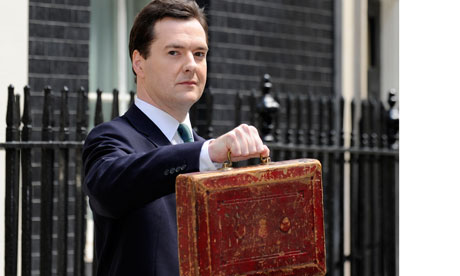
1) The government's basic economic strategy will not change: The one thing the coalition parties have not argued about is the need to keep cutting the deficit at the pace they have set. There will still be many, many billions of spending cuts this year and against them, most of the tax changes announced on Wednesday will pale into insignificance.
2) The basic economic numbers will not change: Few economists are expecting the Office for Budget Responsibility to up or downgrade significantly its basic forecasts: how much the economy is - or is not - going to grow; how much borrowing will rise; what will happen to debt and so on.
3) This will be a fiscally neutral budget: There will be no "unfunded giveaways," to quote the chancellor. Every tax cut will have to be paid for by a tax rise elsewhere. This in itself is a political choice. Labour would probably like to borrow a touch more to do what it would want to do, like cut VAT. Many Tories would like to cut spending more so they could cut business taxes further. But George Osborne will simply make some people pay more so others can pay less.
4) But the politics will change: The two coalition parties are carving out the meat of their offer for voters at the next election. The Lib Dems will claim that it is they who are leading the drive to take millions of lower paid workers out of income tax. The Conservatives will argue that, as well as cutting tax for middle earners too, they are also making the economy more competitive by trimming corporation tax and - maybe - cutting the 50p top rate of tax.
5) The Budget has tested the seams of the coalition: The Lib Dem strategy of negotiating in public has irritated some Tories. But George Osborne has been explicit in making clear that this has been a coalition Budget, and as such will "satisfy a broad range of public opinion". The risk is that it looks like a Budget that has been agreed in the interests of the coalition rather than in the interests of the nation.
6) At the heart of this Budget is likely to be a deal: George Osborne is likely to take more low earners out of income tax and squeeze the rich by making it harder for them to avoid tax and by capping the number of allowances and reliefs they can claim, the so-called "tycoon tax". In return, he has carved himself the political space and cover to start cutting the 50p rate, if that is what he wants to do.
7) A note of caution on income tax: Taking people out of income tax is good for people who are not paying tax any more. It is less good for poor people who do not pay tax already. It is less good for people who have to start paying the top rate of tax as a result. It is also less good for people who only have one earner in the family compared to those who have two earners, both of whom can benefit from the tax cut.
8) The big risk for the Conservatives would be cutting the 50p top rate of tax: The risk is that they will be accused of helping rich people earning more than £150,000, and no amount of a crackdown on tax avoidance by the rich will overcome that. Some Tory MPs think it could put at risk David Cameron's attempts to modernise their party. And if the chancellor cuts the rate from 50 to 45p, will the gain in business confidence really outweigh the political downside. Is a 5p cut really enough of a signal to foreign investors to come and do business in Britain? What is 5p among friends? Surely, if Mr Osborne is going to take the risk, he might as well go the whole hog and abolish the rate entirely so that more rich people stay in Britain - as the argument goes - and pay more tax in the long run.
9) The big risk for the Liberal Democrats would be agreeing to cut the 50p rate: Many of the party's natural supporters struggle to understand why helping rich people should be a priority. Others - like the party's former Treasury spokesman Lord Oakeshott - believe the party should not agree to any cut in the 50p rate unless they get a mansion tax in return. The tricky task for George Osborne will be to try to show that overall the rich will pay more tax and the poor less.
10) Do not think the European problem has gone away just because Robert Peston isn't on the telly talking about it every night: As George Osborne told Andrew Marr: "Just because the European Central Bank is putting a lot of money into the eurozone does not mean some of the fundamental problems have been resolved and you know that remains a major risk to the UK and the rest of the world."
11) Ignore the slogans: A "Budget for working people" can mean a lot of things to a lot of people. Will, for example, Mr Osborne reverse his planned cuts in working tax credits which is, of course, a tax rise for, er, working people?
12) There is a fight that has yet to be had over planning: This divides the Conservatives. Some believe the new planning reforms published this week will help boost the economy, paving the way for a flood of new houses. Others think it will simply be a developer's charter to concrete over beautiful green fields that happen not to be part of the protected green belt. Let battle begin.
Subscribe to:
Posts (Atom)