Students always talk about infrastrucure spending, without really knowing why it is so important. Here is a short revision video on the importance of infrastructure spending for both aggregate demand and long run aggregate supply. Economic growth places rising demand on a country's infrastructure assets and the UK is ranked only 28th out of 138 countries globally for the perceived quality of our transport, telecoms, power and other critical infrastructure.
Showing posts with label infrastructure. Show all posts
Showing posts with label infrastructure. Show all posts
Saturday, 3 June 2017


Sunday, 26 February 2017
Theme 4: Kenyan railroads and living standards
An excellent developmental story coming out of Kenya. The clip highlights the way in which the development of infrastructure can be associated with improved living standards in all sorts of ways.
Not only is the transformative effect of the railway corridor for the Kenyan economy highlighted, but the improved living standards for those who live alongside its tracks is also made clear.
Not only is the transformative effect of the railway corridor for the Kenyan economy highlighted, but the improved living standards for those who live alongside its tracks is also made clear.
Wednesday, 24 September 2014
Unit 4: Hotel India - Episode 1
Documentary series going behind-the-scenes of India's oldest hotel. This final episode looks at guests directly connected to the hotel's past and the terrorist attack of 2008.
It's a really interesting insight into the problems India is facing as it tries to grow economically.
It's a really interesting insight into the problems India is facing as it tries to grow economically.
Wednesday, 25 September 2013
Unit 1 & Unit 4: Cost Benefit analysis of HS2
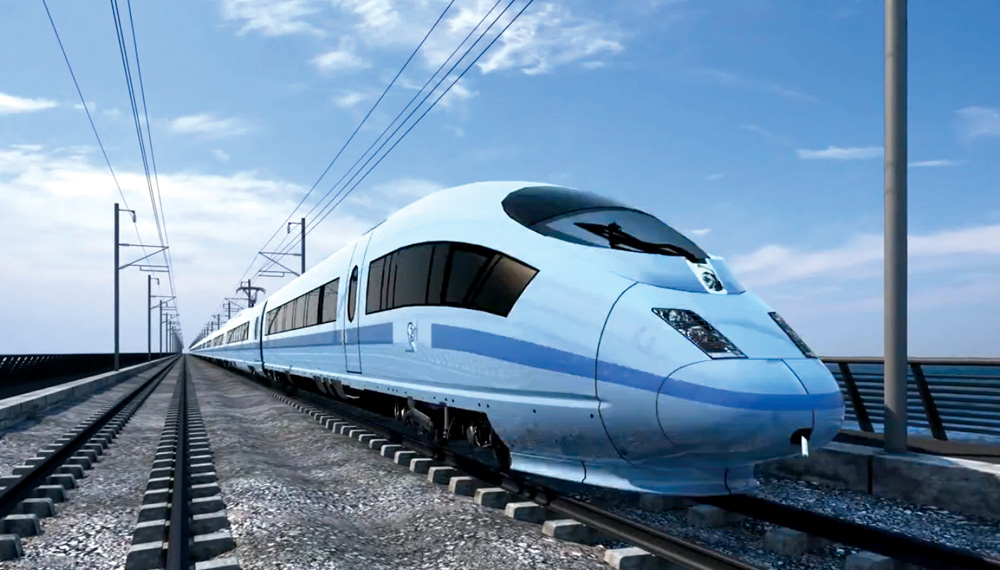
The article is useful for AS students looking at market failure, but also Unit 4 students discussing Economic Development and infrastructure spending.
Related Questions:
Unit 1: January 2010, Question 10
Unit 4: June 2011, Q1 & June 2012, Q5
Saturday, 21 September 2013
Unit 4: Infrastructure Investment in Ethiopia
The Ethiopian government is ploughing up to 15% of her GDP into large-scale
infrastructure development projects - will this kick start a renewed period of
fast growth and development? The Grand Ethiopian Renaissance Dam will be the
largest hydroelectric power plant in Africa when completed, delivering 6,000MW.
The cost and the potential impact of diverting the Blue Nile have created
controversy in the region. This FT video looks at some of the issues.
This BBC news resource is also useful: The dam that divides Ethiopians
Another useful clip:
Related past essay question:
Evaluate four ways in which economic growth and development might be
promoted in developing countries. (30 Marks)
This BBC news resource is also useful: The dam that divides Ethiopians
Another useful clip:
Related past essay question:
Evaluate four ways in which economic growth and development might be
promoted in developing countries. (30 Marks)
Tuesday, 18 September 2012
Unit 4: Infrastructure & development
This is an excellent article which can help you understand the issues faced by even the best developing countries. A great foundation for unit 4 essays dealing with issues in development.
Infrastructure includes physical capital such as transport networks, energy, power and water supplies and telecommunications networks. Poor infrastructure hampers growth because it causes higher supply costs and delays for businesses. It reduces the mobility of labour and affects the ability of exporters to get their products to international markets.
A good example to use is India (click here for article) whose future growth is threatened by structural weaknesses in her infrastructure. Huge investment is needed in better roads, rail, bridges, and power and energy networks. Infrastructure is lacking too in agriculture.
Here are three examples of infrastructure deficiencies:
1. India: India’s irrigation system is deficient and not properly managed and this has made it very difficult to sustain food grain production when rainfall is less than expected – as was the case in 2012. This has led to a surge in food prices which hits the poorest communities hardest. For a few days in the summer of 2012, much of northern India was plunged into darkness for two consecutive days. About 700 million people were left without power, a situation that affected transport, communication, healthcare, industries and farming. India needs an estimated $400bn investment in the power sector if it is to meet its development goals.
2. Brazil: Host for the 2014 World Cup and the 2016 Olympics. Brazil’s growth is constrained by infrastructure weaknesses: In 2011, only 14% of her roads were paved. The World Economic Forum ranks Brazil’s quality of infrastructure 104th out of 142 countries surveyed, behind China (69th), India (86th) and Russia (100th).
3. Sub-Saharan Africa: The combined power generation capacity of the 48 countries of Sub-Saharan Africa is 68 gig watts – no more than Spain’s. Excluding South Africa, this figure falls to 28 GW, equivalent to the capacity of Argentina (except Argentina has a population of 40 million and Africa has 770 million.) A recent report from the Infrastructure Consortium of Africa (ICA), found that poor road, rail and harbour infrastructure adds 30-40% to the costs of goods traded among African countries. This chronic shortage of energy - with firms and people facing acute shortages of power – is a major barrier to growth and development.
Many countries will need to increase their spending on infrastructure in the years ahead to adapt to and deal with the consequences of climate change.
There has been much interest in recent years concerning the investment in infrastructure that businesses from emerging countries such as Brazil and China are making in the continent of Africa. China’s foreign direct investment in Africa has jumped from under $100 million in 2003 to more than $12 billion in 2011.
India's Energy Deficit
Wednesday, 15 February 2012
Unit 4: Economics Development - Africa and infrastructure funding

Highway networkThrough African Union countries. Cost unknown. A 100,000-kilometre expansion of the continent’s highway system is planned by the African Union. It is to comprise nine motorways, pass through 41 cities and connect about 500 million people. It is still at the concept stage.
Ethiopia-Kenya road linkCost US$326 million. The finishing touches are being put on plans for a road to link Ethiopia and Kenya, with the Kenya leg terminating at the port of Mombasa. It is projected to boost annual trade between the countries from $35m to $175m and help to make Kenya a medium-income nation within 20 years.
South Africa and Swaziland railroadCost 16 billion rand (Dh7.66bn). South Africa is to build a railway corridor passing through tiny Swaziland and linking coalfields in the interior with Richards Bay. The link would allow annual coal exports to India and China to increase by 20 million tons.
Democratic Republic of Congo road-rail linkCost $5bn. China has agreed to lend the mineral-rich Democratic Republic of Congo (DRC) the money to build nearly 2,000km of roads and railways. The system is to link the DRC’s interior with the coast as well as neighbouring countries.
With few cross-continent railroads or waterways, most goods must move by land. But getting a container from one country to another means surviving potholed roads, flooded bridges and even landmines. Along the way, there are officials, policemen and soldiers demanding bribes to allow the goods to continue on their way.
A study by the US department of commerce shows that transporting a tonne of wheat over the 1,000 kilometres from Mombasa in Kenya to Kampala in Uganda costs more than to ship it from Mombasa to Chicago - ten times the distance.
Questions for discussion:
How can Africa fund the improvements in infrastructure?
What are the advantages & disadvantages of external funding/internal funding?
Subscribe to:
Posts (Atom)