Excellent and timely link to an article from the BBC discussing supply side policies in the UK. This video (Click here to access) discusses programmes aimed at getting the structurally unemployed back to work.
Questions to think about:
How successful would this policy be? (will it work/is it working)
Are there any downsides/costs to this policy?
Showing posts with label supply side policies. Show all posts
Showing posts with label supply side policies. Show all posts
Wednesday, 8 May 2019


Monday, 6 May 2019
Policies to Improve Competitiveness (Revision Essay Plan)
Here is an answer to this question:
"With reference to a country of your choice, evaluate policies that might be most effective in improving competitiveness."
This essay uses Poland as a contextual example, but you could just as easily use the UAE, UK or any country of your choice.
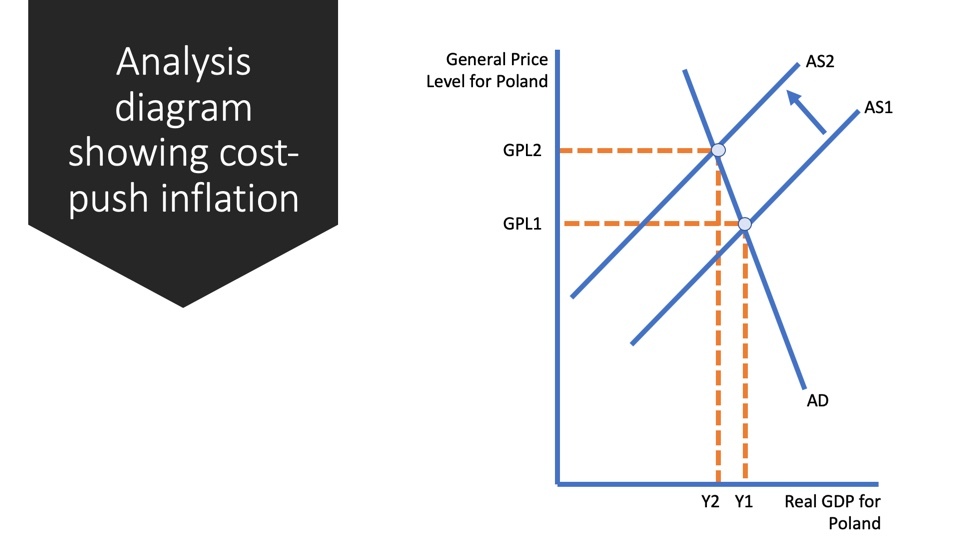
"With reference to a country of your choice, evaluate policies that might be most effective in improving competitiveness."
This essay uses Poland as a contextual example, but you could just as easily use the UAE, UK or any country of your choice.
Once you have read the answer, discuss with a friend how you would change the analysis and evaluative points for your chosen country.
Analysis and application point 1
Competitiveness is the ability to sell goods and services successfully at a profit in overseas markets. Poland is a country inside the EU single market but retains their own currency – the Zloty. 25% of Polish exports go to Germany. One policy that might help to improve the price competitiveness of Poland is for the Polish central bank to intervene in the currency market to bring about a competitive depreciation against the Euro. This might be done by lowering policy interest rates or by intervening directly to sell Zloty and buy Euros. A weaker currency would make Polish products relatively cheaper in Western European markets, as a result, there might be expenditure-switching effects as Poland sells more exports and domestic demand for imports contracts since they become more expensive priced in Zloty. A consequence of this might be that Polish exporters will make more profits and this could then help them to increase capital investment. This in turn could cause an increase in productivity which would help maintain competitiveness in the long-term.
Evaluation point 1
Although in theory a depreciation of the Polish Zloty might improve the price competitiveness of the Polish economy, in practice the benefits might be eroded by some of the negative effects of a weaker currency. For example, Poland imports animal feed, vehicle parts and pharmaceuticals mainly from other EU countries. When the external value of a currency falls, then the domestic price of imported products almost inevitably goes up. This leads to a deterioration in the terms of trade meaning that Poland has to export more to pay for a given volume of imports. Crucially it can and does lead to a rise in cost-push inflation which reduces the real incomes of Polish consumers and also reduces the profits of Polish companies reliant on imports. Higher relative inflation can therefore make Poland less competitive inside the EU single market.
Analysis and application point 2
A second approach to improving competitiveness could be to introduce supply-side economic reforms to the Polish economy. Poland was once a transition economy and has used a number of market-friendly policies during the move away from socialism. These have included reductions in corporation tax and income tax – for example income tax rates in Poland are 18% and 32% contrasted with 20% and 40% in the UK. Lower tax rates have encouraged a rise in the number of business start-ups and inflows of foreign direct investment into the Polish economy. This investment has added to the country’s capital stock and has helped to increase labour productivity which in turn is a key factor causing real per capita incomes to rise. Inward investment also creates the extra productive capacity which increases Poland’s export potential. Foreign-owned firms are said to account for over half of Poland’s exports and the revenue from profits made by transnational businesses manufacturing in Poland also generates extra tax revenues.
Evaluation point 2
Market-friendly supply-side policies can improve the long-term competitiveness but they can also come into conflict with other macro objectives. For example, cuts in direct taxation on household incomes and corporate profits might contribute to more inequality and relative poverty within Poland. Higher inequality can actually damage competitiveness over time in part because a widening gap between the lower middle class and poor households compared to the rest of society might lead to more people being unable to afford good quality education and health care. If education outcomes suffer, then a country will not be improving its human capital as fast as possible and this can lead to structural problems such as higher unemployment and ultimately, lower labour productivity which is a key factor influencing price competitiveness.
Final reasoned comment / conclusion
In the long-term, competitiveness is mainly determined by the supply-side performance of a country. Therefore, I would argue that Poland should use policies that increase investment in education to build up human capital and also encourage more women into the active labour force. Poland actually ranks higher than the UK in the PISA rankings for Maths, Science and Reading. And Poland ranks third for best computer programming talent, ahead of the US and India. Investment in early years, secondary and higher education provides the best platform for improving non-price competitiveness in areas such as innovation, adoption of artificial intelligence and robotic technologies which will matter in years to come.
Monday, 15 April 2019
Supply side economics - April 2019
Supply-side policies are mainly micro-economic policies aimed at making markets and industries operate more efficiently and contribute to a faster underlying-rate of growth of real national output.
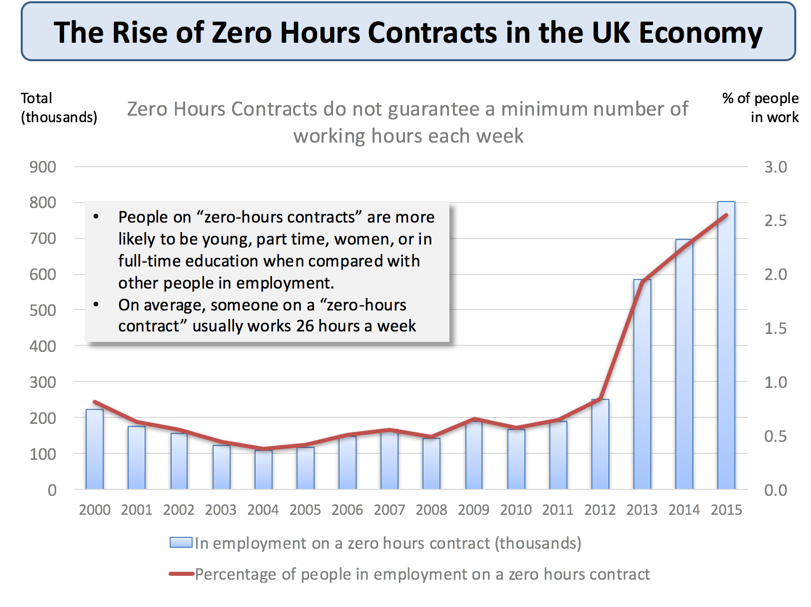
- Successful policies have the effect of shifting the LRAS curve to the right leading to a rise in potential output
- Most governments believe that improved supply-side performance is the key to achieving sustained growth without causing a rise in inflation.
- Supply-side reform on its own is not enough to achieve this growth. There must also be a high enough level of AD so that the productive capacity of an economy is actually brought into play.
- Supply-side policies can be implemented by the public or the private sector
Supply-side objectives
Key concepts to focus on are incentives, enterprise, technology, mobility, flexibility and efficiency.
- 1.Improve incentives to look for work and invest in people’s skills
- 2.Increase labour and capital productivity
- 3.Increase occupational and geographical mobility of labour to help reduce the rate of unemployment
- 4.Increase investment and research and development spending
- 5.Promoting more competition and stimulate a faster pace of invention and innovation to improve competitiveness
- 6.Provide a platform for sustained non-inflationary growth
- 7.Encourage the start-up and expansion of new businesses / enterprises especially those with export potential
- 8.Improve the trend rate of growth of real GDP
Recent UK Government Supply-Side Policies
- Relaxation of the Sunday trading laws – but worries over work-life balance
- 24 new regional enterprise zones – aiming to take advantage of external economies of scale by attracting inward investment
- Completion of London’s Cross Rail – with plans for Cross Rail 2 and HS3 (East-West high speed rail in North of England)
- Tax relief for businesses investing in low carbon technologies – designed to increase investment in renewable energy capacity
- Increases in the income tax free allowance to £11,000 a year
- Reduction in taper rate at which universal benefit is taken away as people earn extra income from 65% to 63% - helps work incentives
- Main rate of corporation tax (a tax on profits) - currently 20% - to fall to 17% by 2020 – designed to stimulate domestic I and FDI
- UK National Infrastructure Plan – range of projects including the new nuclear power station at Hinkley Point in Somerset
- Planned investment of £400m in 'full-fiber' super-fast broadband
- £2.3 billion for a new Housing Infrastructure Fund – i.e. investment in improved road and water connections to support new housing
Monday, 18 March 2019
Wednesday, 7 February 2018
Supply Side Policies - Everything you need to know
This is excellent for all Economists, both Y11 and Sixth Form!
Supply-side policies are mainly micro-economic policies aimed at making markets and industries operate more efficiently and contribute to a faster underlying-rate of growth of real national output.
- Successful policies have the effect of shifting the LRAS curve to the right leading to a rise in potential output
- Most governments believe that improved supply-side performance is the key to achieving sustained growth without causing a rise in inflation.
- Supply-side reform on its own is not enough to achieve this growth. There must also be a high enough level of AD so that the productive capacity of an economy is actually brought into play.
- Supply-side policies can be implemented by the public or the private sector
Supply-side objectives
Key concepts to focus on are incentives, enterprise, technology, mobility, flexibility and efficiency.
- 1.Improve incentives to look for work and invest in people’s skills
- 2.Increase labour and capital productivity
- 3.Increase occupational and geographical mobility of labour to help reduce the rate of unemployment
- 4.Increase investment and research and development spending
- 5.Promoting more competition and stimulate a faster pace of invention and innovation to improve competitiveness
- 6.Provide a platform for sustained non-inflationary growth
- 7.Encourage the start-up and expansion of new businesses / enterprises especially those with export potential
- 8.Improve the trend rate of growth of real GDP

Market-based supply-side policies
- 1.Cutting government spending and borrowing
- 2.Lower business taxes to stimulate investment and lower income taxes to improve work incentives
- 3.Reducing red-tape to cut the costs of doing business
- 4.Measures to improve the flexibility of the labour market / reforming employment laws
- 5.Policies to boost competition such as deregulation and tough anti-monopoly and anti-cartel laws
- 6.Privatisation of state assets (selling off public sector businesses into the private sector)
- 7.Opening up an economy to overseas trade and investment

Interventionist policies
- 1.State has key role in investing in public services and building critical infrastructure
- 2.Tax incentives and welfare reforms can encourage more people into work
- 3.A commitment to a fair minimum wage / living wage to improve work incentives
- 4.Active regional policy to boost under-performing areas / areas of high unemployment
- 5.Some case for selective import controls to allow domestic industries to expand
- 6.Management of the exchange rate to improve competitiveness of export industries
- 7.Nationalisation of some key industries
- 8.Stronger regulation of industries
Recent UK Government Supply-Side Policies
- Relaxation of the Sunday trading laws – but worries over work-life balance
- 24 new regional enterprise zones – aiming to take advantage of external economies of scale by attracting inward investment
- Completion of London’s Cross Rail – with plans for Cross Rail 2 and HS3 (East-West high speed rail in North of England)
- Tax relief for businesses investing in low carbon technologies – designed to increase investment in renewable energy capacity
- Increases in the income tax free allowance to £11,000 a year
- Reduction in taper rate at which universal benefit is taken away as people earn extra income from 65% to 63% - helps work incentives
- Main rate of corporation tax (a tax on profits) - currently 20% - to fall to 17% by 2020 – designed to stimulate domestic I and FDI
- UK National Infrastructure Plan – range of projects including the new nuclear power station at Hinkley Point in Somerset
- Planned investment of £400m in 'full-fiber' super-fast broadband
- £2.3 billion for a new Housing Infrastructure Fund – i.e. investment in improved road and water connections to support new housing
Monday, 27 November 2017
All year groups: Post Brexit Britain - Macro economic ideas
Lots of macro economics here, with evaluation points and links to other useful pages discussing the UK economy. What are your thoughts?
Sunday, 30 April 2017
Theme 2 & 4: Essay Plan - Monetary and supply side policies
Here is a video recording of a revision webinar looking at shaping an answer to this 25 mark question.
“Monetary policy is as important as supply-side policies in making a country more internationally competitive” With reference to examples, to what extent to you agree?
“Monetary policy is as important as supply-side policies in making a country more internationally competitive” With reference to examples, to what extent to you agree?
Tuesday, 21 March 2017
Wednesday, 27 April 2016
Monday, 11 April 2016
Sunday, 31 January 2016
Wednesday, 25 September 2013
Unit 1 & Unit 4: Cost Benefit analysis of HS2

The article is useful for AS students looking at market failure, but also Unit 4 students discussing Economic Development and infrastructure spending.
Related Questions:
Unit 1: January 2010, Question 10
Unit 4: June 2011, Q1 & June 2012, Q5
Monday, 6 May 2013
Tuesday, 31 January 2012
Unit 4: High Speed trains for the UAE? - A walk on the Supply Side!
 Another article from the 7 Days suggests that improving transport in the region will help business and economic growth
GULF countries should swallow the bumper bill and take on the daunting engineering challenges of developing a regional high-speed rail network, a pair of industry experts have said.
The duo said the economic benefits of such a service will eventually outweigh the headaches of its construction.
Delegates at a briefing on high-speed rail, held on the eve of a global conference being held in Dubai, heard how Japan-style bullet trains should be embraced by the Gulf - and that the use of modern magnetic ‘Maglev’ technology means the service might not even need rails.
Alan James, CEO of UK Ultraspeed, a firm trying to convince investors to back a British Maglev line, which could see trains reach speeds of
more than 500kph, said a line linking the six nations of the Gulf Co-Operation Council (GCC) would have many benefits.
“It will create an economic super-region, pooling its strength to compete more strongly in the global economy,” he said.
Akihiko Nakamura, general manager at the Central Japan Railway Company, which operates its own bullet trains, said that more than half of all journeys of over 500 kilometres in Japan today are made by train.
That compares to the modest number in the UAE currently made on public transport.
Neither man sought to hide the huge cost of a GCC high-speed network, which would run into billions of dollars and require elevated tracks to carry the trains over desert terrain.
But James said that, after examining the feasibility of a Maglev line between Scottish cities Glasgow and Edinburgh, about an hour’s drive apart, he is convinced super-fast trains save governments money as they do not duplicate projects.
“If your two major cities are only 15 minutes apart, you only need one cancer hospital, not two. You only need one airport,” he said.
“All of those produce significant savings for the long-term which will more than outweigh the capital costs of constructing it,” he said.
Subscribe to:
Posts (Atom)