Total Pageviews

Showing posts with label brexit. Show all posts

Monday, 6 May 2019

EU Customs Union Membership (Revision Essay Plan)

Here is a suggested essay plan to this question: 


"Examine the argument that the UK economy will be better off by remaining inside the European Union Customs Union. Use diagrammatic analysis to support your answer." (25 Marks)


Contextual background (not part of the answer)
The EU accounted for 46% of UK exports of goods and services and 53% of imports in 2018. The UK had a trade deficit with the EU of £64 billion in 2018 and a trade surplus of £33 billion with non-EU countries. In June 2016, the United Kingdom voted in a referendum to leave the European Union. Some economists argue that the economic performance of the UK economy in the long run would be better served by an agreement to remain inside the EU customs union.

KAA Point 1: Keeping trade frictions low

Customs Union (CU) involves free trade between members & a common external tariff on imports from non-member countries. One argument for remaining is that EU is UK’s biggest trade partner – lots of cross-border trade e.g. component parts. Inside CU makes it less costly for TNCs to invest & produce in the UK and then export to EU. Extra trade friction costs outside CU lead to higher consumer prices & lower real incomes.

EVAL Point 1: Trade with faster-growing economies

Staying outside the Customs Union means that the UK can negotiate new preferential / free trade agreements outside the EU with faster-growing countries such as China, India, Australia, Vietnam and South Korea. Although the EU is the UK’s biggest trade partner, the % of trade in goods and services with the EU has been falling and other parts of the world economy are growing more strongly.

KAA Point 2: Economic costs from EU tariffs

If the UK leaves the Customs Union (and in the absence of a trade deal with the EU) then import tariffs would apply to UK exports. The average EU import tariff is 4.8%. The EU CET ranges from 0% on pharmaceutical products and 11% on footwear to 45% on tobacco. Higher tariffs can damage consumer welfare and lead to regressive effects on the distribution of income along with higher inflation and interest rates.
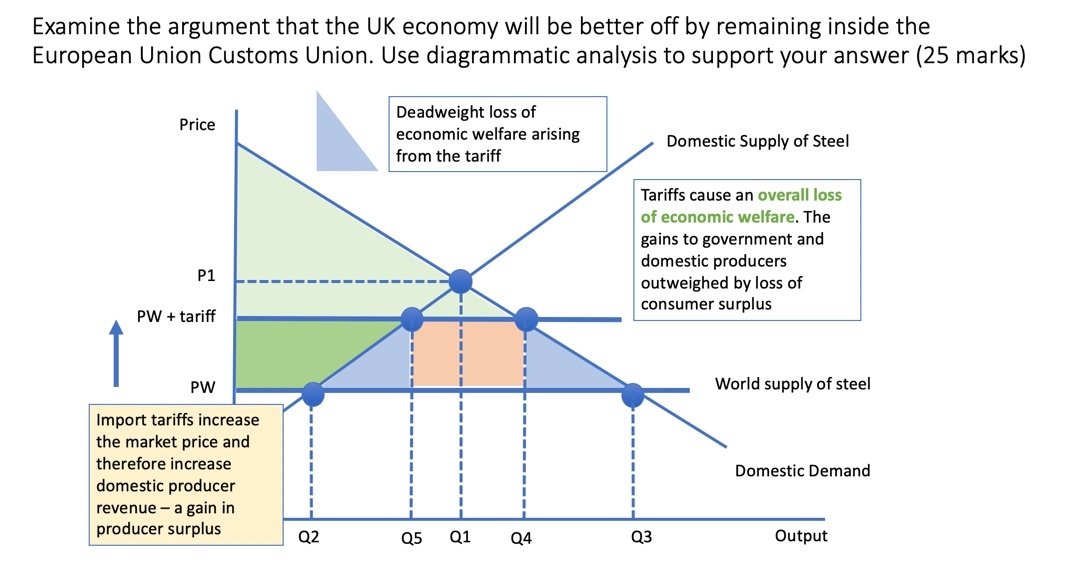

EVAL Point 2: Average tariffs have been falling

Staying inside the EU customs union would mean that the UK would be obliged to follow changes in EU trade agreements without any say in how they were negotiated. And whilst there would be some additional tariffs initially, a UK-EU trade agreement is likely. Average import tariffs have fallen in recent years which might help mitigate the macroeconomic effects of leaving the EU Customs Union agreement.

FINAL CONCLUSION

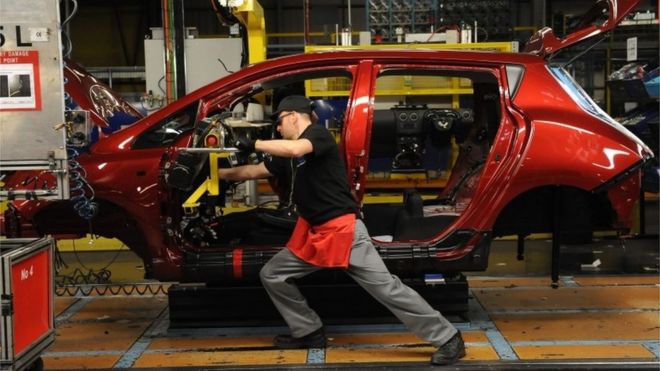
Overall, continued membership of the customs union in my opinion is likely to be best for the UK. The gravity theory of trade suggests strongly that we trade more with countries in close proximity and this is unlikely to change fundamentally in the years ahead. The EU has more than sixty five free trade and preferential agreements with over countries including Canada, South Korea and Australia and there is no guarantee that the UK will be able to achieve better deals with these countries on their own. In a globalized world, keeping trade frictions low is vital to continue to attract inward investment. Nissan has a UK workforce of 6,700 and exported around 250,000 cars to the EU in 2015, around half of its output. Those exports would face a tariff of up to 10 per cent outside the customs union unless a free trade deal could be negotiated. Honda has already announced that it will be closing their Swindon plant in 2021. These are important sources of jobs and incomes for regions outside of London, and provide evidence that the UK should continue to stay inside the CU for the foreseeable future.


Sunday, 14 October 2018

Brexit and turkeys for xmas!

Interesting piece in the Guardian this weekend about the impact Brexit is having on Turkey prices. Click here for the article.

Issues to consider:

What has been causing this price rise?
Can you draw a diagram to show this.
Will people still buy turkeys for xmas? If so, why?
Will there be an impact on other goods & services bought at xmas?


Tuesday, 5 June 2018

Brexit Options

Click here  to access a good article looking at all possible options.

Monday, 4 June 2018

BREXIT - The Issues

All you need to know about the latest issues - click on the following link   BBC - BREXIT


Tuesday, 20 March 2018

The UK and free trade post BREXIT

Click here to read an article which discusses how consumers could see prices fall by up to 1.2% if Britain were to abolish all tariffs once it has left the European Union.


Wednesday, 14 February 2018

The Economics of BREXIT: A must read for A level students

Here are the slides and videos from our revision webinar covering some aspects of Brexit relevant to A level economics students. In particular there is a focus on synoptic connections to micro and macro consequences.


The EU, taken as a whole is the UK’s largest trading partner. In 2016, UK exports to the EU were £236 billion (43% of all UK exports). UK imports from the EU were £318 billion (54% of all UK imports). The UK had an overall trade deficit of £82 billion with the EU in 2016. A surplus of £14 billion on trade in services was outweighed by a deficit of £96 billion on trade in goods.


Monday, 27 November 2017

All year groups: Post Brexit Britain - Macro economic ideas

Click here for a really interesting article on how the government is trying to ensure the UK economy grows post BREXIT.

Lots of macro economics here, with evaluation points and links to other useful pages discussing the UK economy. What are your thoughts?

Tuesday, 14 November 2017

Worried Cornwall (BREXIT county) asks for Government help!

Is this a sign of things to come? Cornwall has called for help from the Government amid fears it will be left without enough people to work its farms post-Brexit. Click here to access link.

This could be a real issue for certain industries. Agriculture and the hotel industry are already feeling the effects of BREXIT, with immigrants coming to the UK to pick cabbages etc at an all time low. The fear is that many sectors in Cornwall rely on European workers and as a consequence will struggle to fill many vital positions. “Broccoli is already lying unpicked in the fields.”

Saturday, 3 June 2017

Paper 3: Another possible 25 marker: Net migration into UK

This could also be a good question which looks at micro and macro effects of the fall in net migration into the UK post BREXIT.

Thursday, 25 May 2017

Paper 3: Micro and macro impact of a depreciating currency

Theme 4: Micro and macro impact of a trade bloc - The EU

Here is a video recording of an A-level economics revision webinar on aspects of European Monetary Union.
  • Monetary union is a deeper form of integration
  • The single European currency, the euro, was introduced in 1999 and came into common circulation in January 2002
  • No country has yet left the Euro Area
  • As of May 2017, there are nineteen member nations
  • Of the 28 EU countries (the UK leaves in 2019), 9 are not part of the single currency including Denmark, Hungary, the Czech Republic and Poland


Key problems facing the Euro Area economy
  • High structural unemployment + hysteresis effects
  • High levels of government debt + high bond yields for some
  • Risks from price deflation
  • Persistently low aggregate demand / spare capacity
  • Fragile banking sector (non-performing loans)
  • Weak capital investment – some diverting to emerging Asia
  • Big trade / current account imbalances 
  • Political tensions and ongoing refugee crisis
  • Declines in subjective wellbeing + rise in poverty
Where next for the Euro Area?
  • Politics takes centre stage in 2017 (Austria, Holland, France and Germany all have key elections)
  • Euro Area is showing stronger (cyclical) growth and falling unemployment with a reduced risk of deflation
  • Is this enough for countries to climb out of the debt crisis?
  • Banking systems remain fragile (especially in Italy)
  • Eurozone’s periphery is still in deep crisis
  • Need for structural economic reforms remains
  • Changing centre of global economic gravity is accelerating
  • Big risk is that hysteresis effects of collapse in investment, structural unemployment and impact of rising inequalities and socio-economic insecurity will damage Europe’s trend growth and the potential to raise living standards.

Thursday, 18 May 2017

Paper 3: The micro and macro economics of BREXIT

Look what I just found online!

Wednesday, 26 April 2017

Theme 3 & 4: Nestle leaving UK to move to Poland!

When it comes to the crunch, capital flows to where the risk-adjusted expected returns are highest. 

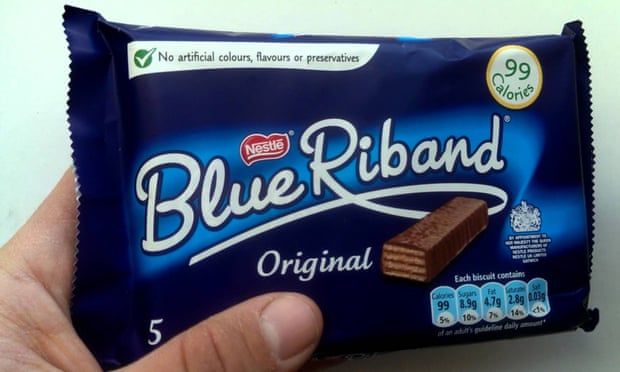
Several hundred jobs are at risk in the UK as Nestle announces that production of the Blue Riband chocolate bar is moving from Britain to Poland. Lower unit labour costs, favourable corporate tax rates and a competitive zloty (a floating currency) are three factors behind the move.

Click here to read a Guardian article on this. 

Sunday, 27 November 2016

Sunday, 30 October 2016

Theme 1 & 3: The cost of a cuppa to go up!

Click here to access a BBC article on why the price of a cup of tea is going to go up! Demirhan, why is this happening?

There is lots here that relates to your micro papers. Costs of production, elasticities, weak pound, competition, normal profits.

Excellent article.

Tuesday, 18 October 2016

Theme 2: Inflation is beginning to rise - Weak pound to blame

Evening everyone. I'm looking forward to Minsung explaining this article in tomorrows lesson! It is really useful to understand what is going on in the UK economy. This is macro economics, something we which will look at after xmas.

However, always good to debate the issues in lessons.

Theme 2, 3 & 4: Will the pound's fall help the UK economy rise?

Larry Elliott's piece here in the Guardian looks at the implications of Brexit, both for the pound in the short-term and the whole economy in the longer term. He reiterates the view that the short-term implications of the weaker currency will change the emphasis within the UK economy.
However, as he points out, its longer term health is largely dependent upon the ability of the UK economy to adapt and adopt the structural reforms required to tackle its twin deficits. If we fail to do this, we've missed a genuine chance to rebalance the economy at a time which might permit seismic change.

Sunday, 16 October 2016

Theme 3 & 4: The depreciation of the pound and how it affects us all!

Click here to access many recent articles on the collapse of the pound sterling. This is having (and will have) a major impact on the UK economy and hence is extremely likely to be a question on your exam papers next summer!

We will look at this when we study currency movements after xmas, but please take some time to read some of the various articles. It would be great if you could come to class and discuss what you have read and even ask some questions.


All Themes: UK food prices going up - BREXIT being blamed

See below the article that discusses food price inflation in the UK. This has many links to economics. Supply and demand, elasticity, exchange rates, free trade, inflation to name but a few. I am going to stick a name in this piece, just to see if you are reading this stuff! So, Abi Christon......I'll let you explain the article next lesson!

Here’s Just How Much More Expensive Food Has Got Since The Brexit Vote

Butter up 58%. Sugar up 37%. Beef up 33%. Pork up 18%. Wheat up 17%. The list goes on…
Britain’s food producers are facing price hikes of more than 50% on some key ingredients since the UK voted to leave the EU, figures obtained by BuzzFeed News reveal.
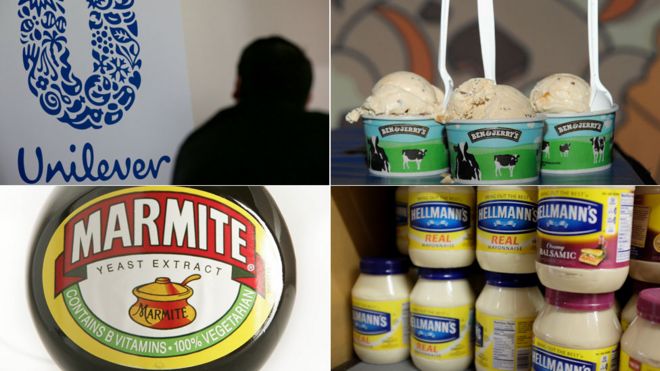
This week, Unilever, the producer of brands including Marmite, PG Tips, and Lynx, had a public row with Tesco after Unilever sought price hikes of around 10%, blaming higher costs post-Brexit. Newspapers and commentators suggested the company, which backed Remain, may be trying to profiteer off the back of Brexit.
However, the data suggests the wholesale cost in sterling of many key foodstuffs has increased substantially since June. The new figures, produced by the data consultancy firm Mintec, compare the prices of key ingredients today to the day before the Brexit vote in June.
The Mintec figures suggest a tonne of New Zealand butter costs 58% more than it did in June, while sugar costs 37% more, beef is up 33%, pork is up 18%, and wheat is up 17%.
Mintec
This table shows the change since the EU referendum in the price of a selection of foodstuffs. The left-hand columns show the price changes in pound sterling, while the right-hand column shows the price change in the foodstuff’s native currency.

For everything except cocoa – which is traded in sterling – the UK has seen bigger price rises.
The key driver of many of the increased prices is the drop in the value of the pound, which has fallen around 17% since the day of the EU referendum.
These figures don’t mean prices on the supermarket shelf will go up this dramatically, or immediately. Food suppliers generally agree contracts with fixed prices for around six months or so, which delays the impact of price rises.
Consumer prices will also rise by less than this as ingredients are just one of many costs in the supply chain. However, within around a year or so price changes are passed to the consumer.
Helen Dickinson, CEO of the British Retail Consortium, which represents supermarkets and retailers, tacitly acknowledged in an emailed press release on Thursday that there is “inflationary” pressure in the food supply chain, and said retailers will not be able to absorb it.
“Retailers are firmly on the side of consumers in negotiating with suppliers and improving efficiencies in the supply chain to control the inflationary pressure that is building through the devaluation of the pound,” she said.
“However, years of falling shop prices and higher costs have left limited scope for retailers to continue absorbing this pressure, and everyone in the supply chain will need to play their part in maintaining low prices for consumers.”
A food supplier contacted by BuzzFeed News confirmed the pressure.
“The reality is that costs are increasing for every supplier,” he said. “Right now, every supplier is having a debate about what to do.”
Mintec noted that the food sector would be particularly affected by the weakened pound.
“For UK exporters, a weaker GBP is positive in the short term as it makes British products more competitive on the global market, driving higher demand,” it noted in a blog post.
“On the flip side, goods imported into the UK would be more expensive. Around 40% of all food consumed in the UK is imported, with over 70% of total food and drink imports from the EU.”

Thursday, 13 October 2016

Theme 3: Tesco removes branded products from shelves

Click here to access a really interesting article on how firms are operating as a result of the fall in the value of the pound.

Could you draw a cost and revenue curve diagram, highlighting the potential issues facing Tesco and it's profits.

Can you also relate this to game theory and how an oligopolistic firm competes.