Showing posts with label depreciation. Show all posts
Showing posts with label depreciation. Show all posts
Sunday, 11 June 2017


Thursday, 25 May 2017
Tuesday, 18 October 2016
Theme 2, 3 & 4: Will the pound's fall help the UK economy rise?
Larry Elliott's piece here in the Guardian looks at the implications of Brexit, both for the pound in the short-term and the whole economy in the longer term. He reiterates the view that the short-term implications of the weaker currency will change the emphasis within the UK economy.
However, as he points out, its longer term health is largely dependent upon the ability of the UK economy to adapt and adopt the structural reforms required to tackle its twin deficits. If we fail to do this, we've missed a genuine chance to rebalance the economy at a time which might permit seismic change.
Sunday, 16 October 2016
Theme 3 & 4: The depreciation of the pound and how it affects us all!
 Click here to access many recent articles on the collapse of the pound sterling. This is having (and will have) a major impact on the UK economy and hence is extremely likely to be a question on your exam papers next summer!
We will look at this when we study currency movements after xmas, but please take some time to read some of the various articles. It would be great if you could come to class and discuss what you have read and even ask some questions.
Thursday, 13 October 2016
Theme 3: Tesco removes branded products from shelves
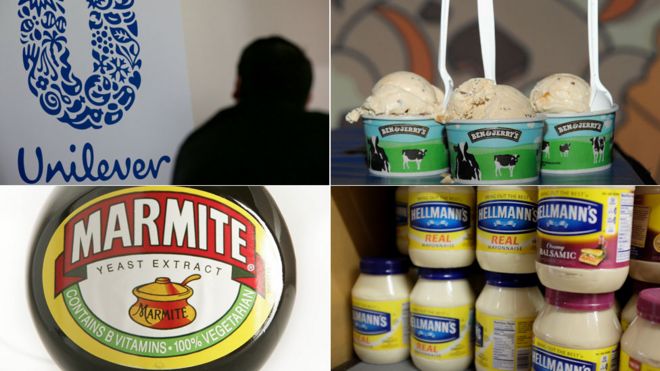
Could you draw a cost and revenue curve diagram, highlighting the potential issues facing Tesco and it's profits.
Can you also relate this to game theory and how an oligopolistic firm competes.
Tuesday, 16 February 2016
Unit 4: Financial markets in turmoil
I read this interesting article on why the financial markets are so volatile at the moment. It does help explain why certain factors are affecting economic growth (or lack of it) in many countries. Essential reading for Unit 4 essays.
Tuesday, 2 February 2016
Unit 4: Why is sterling on the slide?
According to The Economist, Sterling has had a very choppy history, marked by crises such as 1967, 1976 and 1992. And it is having another rocky period. Thanks to Guy Tennant at Norwich School for highlighting this article:
In trade weighted terms, the £ Sterling has dropped more than 7% in just two
months, a fall of a magnitude only surpassed once since the MPC assumed
responsibility for setting UK monetary policy in 1997. The pound has behaved more
like a commodity currency (the Aussie or Canadian dollars) even though it is a large
net importer of commodities.
months, a fall of a magnitude only surpassed once since the MPC assumed
responsibility for setting UK monetary policy in 1997. The pound has behaved more
like a commodity currency (the Aussie or Canadian dollars) even though it is a large
net importer of commodities.

Mark Carney, the governor of the Bank of England, indicated recently that British interest rates were unlikely to rise in the near future. That may have held down Sterling. But interest rate expectations can't explain these moves.
Are fears of BREXIT responsible?
Recently there’s been a big increase in the focus on the UK's EU referendum – with
some insiders believing that the likelihood that Britain votes to exit the EU has risen
from 30% to 35%. The uncertain outcome has led to a weaker sterling, which reflects reduced demand and increased risk for UK assets. “But current sterling weakness
is probably only a small taste of what would be store for the UK in the unlikely event
of an exit”.
some insiders believing that the likelihood that Britain votes to exit the EU has risen
from 30% to 35%. The uncertain outcome has led to a weaker sterling, which reflects reduced demand and increased risk for UK assets. “But current sterling weakness
is probably only a small taste of what would be store for the UK in the unlikely event
of an exit”.
The Economist is against BREXIT, and quotes bank ING, who think the uncertainty of
the vote might lead to a quarter of a point being knocked off this year's GDP growth,
and a further 1.2 points off 2017 GDP if Britain votes to leave. Morgan Stanley's economists write that “We expect the outcome to be a close call. We also think that
a vote to leave the EU would trigger a major and sustained rise in political and economic uncertainty”.
the vote might lead to a quarter of a point being knocked off this year's GDP growth,
and a further 1.2 points off 2017 GDP if Britain votes to leave. Morgan Stanley's economists write that “We expect the outcome to be a close call. We also think that
a vote to leave the EU would trigger a major and sustained rise in political and economic uncertainty”.
Indeed, Brexit could trigger another Scottish referendum to leave the UK. This
uncertainty would make it less likely that both domestic and foreign companies
would invest in Britain and according to another bank: “if the UK voted to leave, the
risk of an immediate and severe weakening in economic activity would be very high
and we would not rule out a recession. Consumer and business sentiment could
decline sharply, leading to a slowdown in consumption and business investment".
uncertainty would make it less likely that both domestic and foreign companies
would invest in Britain and according to another bank: “if the UK voted to leave, the
risk of an immediate and severe weakening in economic activity would be very high
and we would not rule out a recession. Consumer and business sentiment could
decline sharply, leading to a slowdown in consumption and business investment".
Those in favour of BREXIT will dispute the numbers, arguing that Britain will be
better off without the dead hand of EU regulation, contributions into the EU Budget
and so on. Given all the uncertainties (Norway is outside the EU but has to
contribute to the budget, for example), there can be no definitive answer. Fans of behavioural economics might note that minds on either side are unlikely to
be swayed by these numbers; confirmation bias tends to set in (you only believe
"facts" that chime with your initial opinion).
better off without the dead hand of EU regulation, contributions into the EU Budget
and so on. Given all the uncertainties (Norway is outside the EU but has to
contribute to the budget, for example), there can be no definitive answer. Fans of behavioural economics might note that minds on either side are unlikely to
be swayed by these numbers; confirmation bias tends to set in (you only believe
"facts" that chime with your initial opinion).
Axa, the French insurance company, has just come up with a cost of Brexit of
2-7% of GDP, largely down to the effects of reduced investment and consumer
uncertainty. In the long run, the British economy would probably adjust to the
new reality. Open Europe, a think tank, estimated that the shift in UK GDP by
2030 would lie somewhere in the range of minus 1.6% to plus 2.2%.
2-7% of GDP, largely down to the effects of reduced investment and consumer
uncertainty. In the long run, the British economy would probably adjust to the
new reality. Open Europe, a think tank, estimated that the shift in UK GDP by
2030 would lie somewhere in the range of minus 1.6% to plus 2.2%.
Of course, one likely reason for depreciation is Britain's current account deficit,
which at 4.5% of GDP, needs foreign capital to finance it. In the absence of
foreign direct investment, that deficit would be harder to finance; hence sterling's
fall.
A fall in the pound could help exporters but that tactic hasn't been working
elsewhere
(nor did it for the UK when the pound last plunged in 2008-09).
which at 4.5% of GDP, needs foreign capital to finance it. In the absence of
foreign direct investment, that deficit would be harder to finance; hence sterling's
fall.
A fall in the pound could help exporters but that tactic hasn't been working
elsewhere
(nor did it for the UK when the pound last plunged in 2008-09).
Thursday, 8 January 2015
Unit 2 & 4: More data on Russia - excellent application to theory
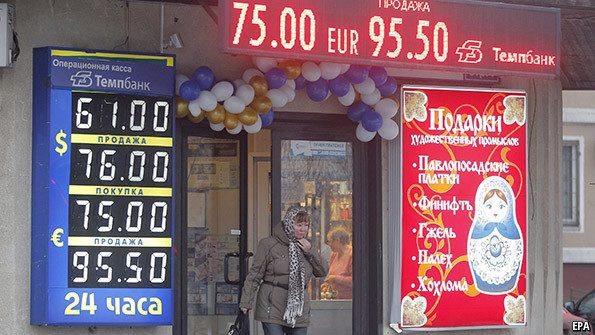
The recession and currency crisis in Russia provides plenty of material for both AS and A2 students to get their teeth stuck into.
AS students could consider the inflationary effects of the plummeting rouble. With inflation at 9.1% and "Russian shopkeepers re-pricing their goods daily" it provides an excellent real world example of what is often referred to in textbooks as menu-costs.
With the rouble depreciation nearly 50% against the dollar in a matter of weeks it is also a useful example of imported inflation, pushing food price inflation to over 30%, which is eroding the living standards of the majority of working Russians.
A2 students could look at the attempts of the central bank to defend the currency. A 6.5 percentage point increase at 1am on the 16th December took the interest rate to 17%, a 12.5 point increase from the start of the year.
Russia has also spent some $80bn dollars in 2014 defending the value of the currency.
The initial effects of he rate rise was indeed to strengthen the rouble but the gains were eroded and reversed by the end of the day. Lots of interesting discussions to be had about what drives currency movements.
There is also plenty of discussion about Russia's debt, both dollar-denominated and rouble-denominated. The ability of Russia pay back $115bn of dollar debt which is due in 2015 is increasingly being called into questions as the rouble depreciates.
This is obviously not just a Russian specific issue, the elections in Greece and the potential 'Grexit' could put Greece's euro-denominated debts under huge pressure.
All this is without even mentioning oil prices. Brent crude oil traded at $50 yesterday, a fresh low.
Sunday, 4 January 2015
Unit 4: Inflation in Russia - depreciating Rouble

Another excellent up to date example of how the currency can affect the rest of the economy.
What are the options for the Russian government?
Is it another example of primary product dependency causing havoc for the rest of the economy?
Subscribe to:
Posts (Atom)