Total Pageviews

Showing posts with label behavioural economics. Show all posts

Sunday, 9 December 2018

Behavioural Theories of the Firm (Behavioural Economics)

As a response to the question from Yousuf last week, here is the simplest explanation (and all you need to know) on why firms organisational decision making.

Behavioural theories of the firm consider alternatives to profit maximisation as a business objective. 

Behavioural economists believe that large businesses are complex organisations made up of many different stakeholders.
Stakeholders are groups made up of people who each have a vested interest in the activity of a business. Examples include:
  • Managers employed by a business and other employees
  • Shareholders are people who have a stake in a business
  • Customers
  • The government and its agencies
Each group of stakeholders will have different objectives or goals. 
The dominant group at any moment can focus on their own objectives. For example price and output decisions may be taken at a local level by managers, with shareholders taking only a distant view of the company's performance and strategy.

Examples of alternatives to profit maximisation

Satisficing behaviour 

This happens when businesses aim for minimum acceptable levels of achievement in terms of revenue and profit.

Sales (output) maximisation

Selling as much as you can without making a loss. At sales maximisation there are normal profits or no supernormal profits.

Sales (revenue) maximisation

The objective of maximising sales revenue rather than profits was developed by economist William Baumol whose work focused on the behaviour of manager-controlled businesses.
  • Annual salaries and perks are linked to sales revenue rather than profits
  • Companies geared towards maximising revenue are likely to make frequent use of price discrimination to extract extra revenue and marginal profit from consumers
  • A business might also aim to maximise sales revenue rather than profits because it wishes to deter the entry of new firms
  • If a firm decides to aim to maximise sales revenue rather than profits, one of the consequences might be a reduction in the price of the firm's shares since the rate of profit is likely to be lower

Managerial Satisfaction Model

If a firm's managers are looking to maximise revenue rather than profit, this will lead to a different price and output combination.
Assuming that the firm's costs remain the same, a firm will choose a lower price and supply a higher output when sales revenue maximisation is the main objective.
Consumer surplus is higher with sales revenue maximisation because output is higher and price is lower. Producer surplus is greater when profits are maximised.

Monday, 12 November 2018

Behavioural economics in action - Black Friday, now singles day!!!

Internet giant Alibaba has set new sales records on Sunday for its biggest shopping day, the annual Singles Day. The Chinese company hit a record $1bn (£774m; €883m) in sales in 85 seconds, and then just shy of $10bn in the first hour of the 24-hour spree.   

Click here to access the article.

What areas of behavioural economics could this identify with?

Sunday, 11 November 2018

Behavioiural Economics - Useful revision/starter material

Some useful revision material for behavioural economics. This area of economics can be used in many types of essay, ranging from market failure/government failure in micro economics to economic policy in macro essays. Excellent when evaluation the effectiveness of government intervention into markets.


Sunday, 15 January 2017

Theme 1: Behavioural Economics - Complete set of presentations

Click here at access several short clips on 'Behavioural Economics'. Excellent for all aspects of a topic that is new to the syllabus and therefore, very likely to be tested at AS and A level.

The assumption of rationality is the following:

Agents choose independently
An agent has fixed tastes and preferences
Gathers complete information on the alternatives
Always make optimal choice given his/her preferences

In the new behavioural models, economic agents are seen to act more like the following:

Have limited computational capacity
Are influenced by their social networks
Often act reciprocally
Lack self control
Make different choices in hot and cold states
Often fall back on simple heuristics
Satisfice rather than maximise
Are influenced to some extent by persistent cognitive biases

Tuesday, 16 February 2016

Unit 4: Financial markets in turmoil

I read this interesting article on why the financial markets are so volatile at the moment. It does help explain why certain factors are affecting economic growth (or lack of it) in many countries. Essential reading for Unit 4 essays.

Saturday, 28 November 2015

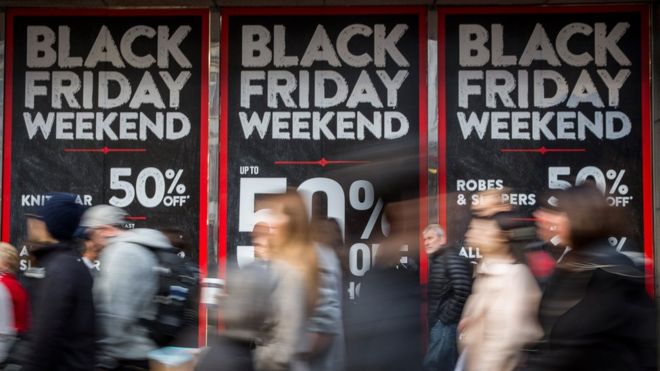
Unit 1: Behavioural Economics - Black Friday & the herd mentality!

Click here to access an article trying to explain why shoppers behave like they do!

Saturday, 21 November 2015

Unit 1: Behavioural Economics

This clip, from Sesame St, is a super example that can be used to illustrate a number of Behavioural Economics and Market Failure principles:


The Edexcel A-level Economics specification requires students to understand the concepts of bounded self-control and cognitive biases. In this clip, Cookie Monster knows that he needs to have more self-control about eating cookies and must learn to "self-regulate" - difficult, though, with his habitual consumption of cookies! A relevant cognitive bias here would be the notion of hyperbolic discounting. In technical terms, this means "time inconsistent discounting", or in plain English, we don't value the future as much as we should, placing too much emphasis on current consumption. It's also easy to link this concept with the market failure associated with demerit goods - why do people continue to consume items that are "bad" for them? Here is another Sesame St clip, again with Cookie Monster: This time, Cookie Monster has to wait for his cookie - and if he can wait, he gets two cookies instead of the one cookie he gets to wait if he can't wait. One cognitive bias shown here is the Rhyme As Reason effect, in which rhymes are perceived as more "truthful". In this case, Cookie Monster is distracted by a song containing lots of rhymes that tell him to wait. And finally, here is Cookie Monster and Sir Ian McKellen learning about the word "resist":

Sunday, 24 June 2012

Unit 1: Market Failure & Cigarettes

This advert is an excellent study in 'Behavioural Economics'. Adults know cigarettes are bad for them, so why do they still smoke.....


Question: Is this a better way than taxing cigarettes? (If it is, why?)