Thanks to Mr Wakerley for finding this latest study on beef.
New research out today from Oxford University indicate that red meat should rise in price by 20% to cover the health costs, and processed meat by 100%! At current prices the social cost of consumption is way higher than the social benefit. Are you for a tax on red meat to internalize the externality and bring red meat production and consumption to a socially economic quantity?
Click here for the article. Questions to discuss: Could you draw the market failure diagram? How effective would this policy be? Are there any potential unintended consequences?
In this video we look at building an answer to a synoptic 25 mark essay question on the micro and macro effects of an increase in house-building in the UK economy. Once again, this could be a synoptic question and therefore would require both micro and macro analysis.
Micro point 1
An increase in new house-building will lower prices and therefore help to make property more affordable for home-buyers.
For example, eliminating VAT on building new homes on brownfield sites reduces costs for building firms and therefore make it more profitable to construct new homes. An increase in supply can bring down prices for home-buyers if the number of new homes exceeds the increase in demand for property.
Whether prices fall and makes housing more affordable depends on the other costs of building homes. The construction industry might be affected by skills shortages which leads to higher wage costs or higher costs caused by tougher building regulations such as meeting emissions targets.
Micro point 2
Increased house-building may lead to environmental damage which could then be a cause of market failure.
Building new homes can lead to external costs in the form of noise pollution and waste products. Building hundreds of new homes in a local area might negatively affect people already living there and lead to increased congestion on roads.
However a counter argument is that the local authority might insist on construction companies spending money on improving roads and also building new facilities for the local community as part of the planning process.
Macro point 1
Policies that successfully increase the rate of new house-building will help to stimulate UK economic growth in both the short and the long run.
This is because investment in new housing is a component of aggregate demand and is likely to lead to a strong multiplier effect as building is a labour-intensive industry. More homes also increases the geographical mobility of labour which will help to reduce the rate of unemployment in the longer term.
The size of the multiplier effect depends on whether the building industry is able to expand their labour force. They may face skills shortages which leads them to use workers who have migrated from overseas. Their remittances sent home would be a leakage from the circular flow of income.
Macro point 2
An increase in house-building will lead to a rise in government tax revenues which will help to bring down the fiscal deficit.
House-building companies will make more profits when new homes are sold and pay more corporation tax. More houses will also be bought and sold leading to an increase in revenue from Stamp Duty and VAT on building/DIY materials.
This macro effect depends on the extent to which building homes is actually profitable. Building firms might face higher costs (e.g. imported raw materials) which lowers the rate of return and cuts corporation tax liability.
Final reasoned comment:
There is substantial unmet demand for housing in the UK and a rise in new house-building is likely to provide significant micro and macro benefits. But the government needs to maintain a balance between homes available to buy and those offered for rent since new homes are unaffordable for many people.
Opportunities for analysis diagrams in this question
Click here to access a recent piece in the Guardian about congestion in the UK. It is a real problem with estimates of cost to the economy in the billions!
Classic example of market failure, government failure, opportunity cost, scarce resources, you name it....
A classic case study of the issues of increasing consumption of junk food. Not only is this a health issue, but also an economic one as well. How would you solve the problem?
The Finnish government has introduced a staggeringly ambitious aim to make their country tobacco free by 2040. technically this aim requires consumption of all kinds of tobacco to fall below 2% of the adult population.
This article from CNN is excellent enrichment reading for teachers and students looking at conventional and conventional interventions designed to change behaviour.
This week on the Beyond the Bike adventure, Stuart and Claire have been investigating the impact of illegal ivory poaching near Lusaka. To support the Beyond the Bike investigation, we have put together a number of resources to link with the Economics curriculum; the resources explore how the global price of ivory is determined, the black market associated with ivory, the negative externalities associated with the ivory market, and possible policy solutions to this example of market failure.
Next, take a look at this excellent 2012 Panorama documentary exploring the nature of the ivory market in more detail:
Finally, go to my Beyond the Bike blog post for a fully-planned group work lesson exploring the impact of the ivory trade on different stakeholders and possible policy solutions from freeing the market through to greater intervention, along with some behavioural economics suggestions.
I saw an interesting piece from the BBC yesterday about the reduction in the use of plastic bags in Tesco, since they introduced the 5p charge. Click here to access.
Points to consider:
What does this suggest about the PeD for plastic bags?
Is it the price that is stopping people buying the bags, or is it something else?
A report from the Bank of England and the Financial Services Authority has suggested that up to 10 executives that worked for HBOS should be banned from working in the City in the future. The named executives include Andy Hornby, HBOS's former chief executive, and Lord Stevenson, its former chairman.
The report suggests that the executives did not take enough action to ensure against any possible collapse in the financial markets which led to HBOS requiring a Government bailout at the start of the financial crisis in 2008.
Moreover, the report suggests that the Bank of England's own regulatory body at the time did not investigate the issues with enough stringency and relied too heavily on information from senior managers within organisations like HBOS.
For students of A Level Economics, this report offers examples of both market failure in the financial markets and the impact of regulatory capture (where the regulatory body of a market are too closely linked to the decision making of the management and ownership of the firms within that industry and therefore unlikely to act fully in the public interest).
This is an interesting clip: Evan Davis interviewing Jamie Oliver about the possible introduction of a Sugar Tax. Jamie - who looks less boyish these days - addressed the Commons Health Select Committee. And who'd have though that he would use the word 'hypothecated' - and what does it mean? That's for you to look up...
Alas, the term is a bit of a 'red herring' - hypothecated taxes rarely deliver the benefits that they are expected to. However, it's noble that Jamie should be tackling obesity: I hope that he's going to reduce the amount of fat in his cooking...
Excellent presentation on a key Unit 1 issue. Why do we smoke too much, why is binge drinking a real issue in UK. Lots of theory and practical examples in this presentation:
Generally speaking, whilst many market failures are bad, some market failures are worse than others. Market failure in the healthcare market can have significant adverse consequences for an economy.
Today, the Competition Commission (CC) has outlined its proposed measures to increase competition in the private healthcare market.
At the heart of these proposals is that freer markets and competition work best.


 Thanks to Mr Wakerley for finding this latest study on beef.
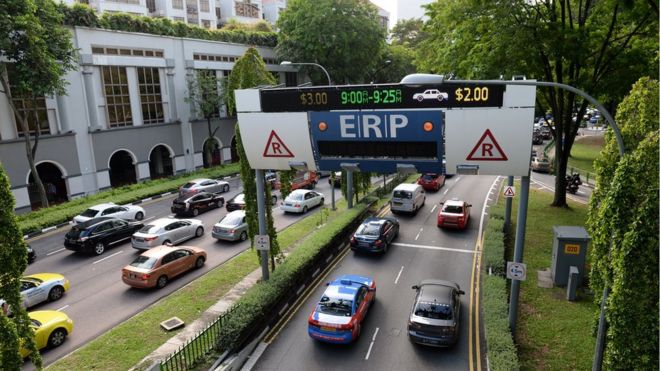 Click here to access article on Singapore's answer to reducing traffic congestion.
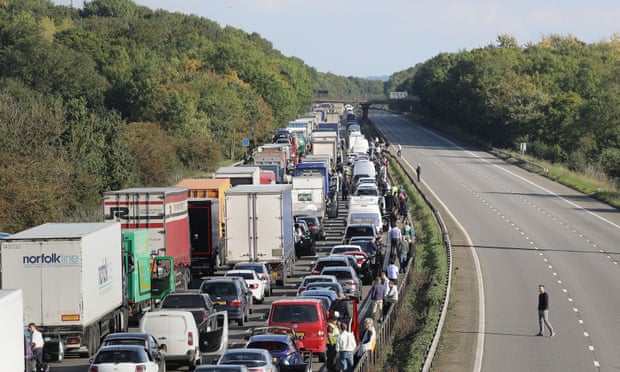 Click here to access a recent piece in the Guardian about congestion in the UK. It is a real problem with estimates of cost to the economy in the billions!
 I saw an interesting piece from the BBC yesterday about the reduction in the use of plastic bags in Tesco, since they introduced the 5p charge. Click here to access.
 A report from the Bank of England and the Financial Services Authority has suggested that up to 10 executives that worked for HBOS should be banned from working in the City in the future. The named executives include Andy Hornby, HBOS's former chief executive, and Lord Stevenson, its former chairman.
