Showing posts with label game theory. Show all posts
Showing posts with label game theory. Show all posts
Saturday, 21 April 2018
Year 13: MCQ's on Game Theory
Here is an updated revision webinar covering aspects of game theory and competition policy. We look at some past multiple choice questions and work through a version of the Prisoner's Dilemma.


Sunday, 19 November 2017
Oligopoly - Prisoners Dilemma (more game theory)
I doubt we will get to this tomorrow, but for some extra reading, try this.
Oligopoly - Game theory
If you get chance before tomorrows lesson, check out the presentation below. It will help explain why oligopolistic markets tend to have stable (or rigid) prices and why they tend to collude.
Sunday, 12 November 2017
Here it is - the latest in the iconic series of heart-tugging Christmas adverts from John Lewis. A rumoured £7m investment for something they hope will have a very short payback period - and perhaps longer-term returns in terms of brand value. An example of game theory in action...check out Marks and Spencer ad as well. It is estimated around 6 billion pounds will be spent on advertising this christmas!!!
Here are the previous ads for you to compare!
Thursday, 13 October 2016
Theme 3: Tesco removes branded products from shelves
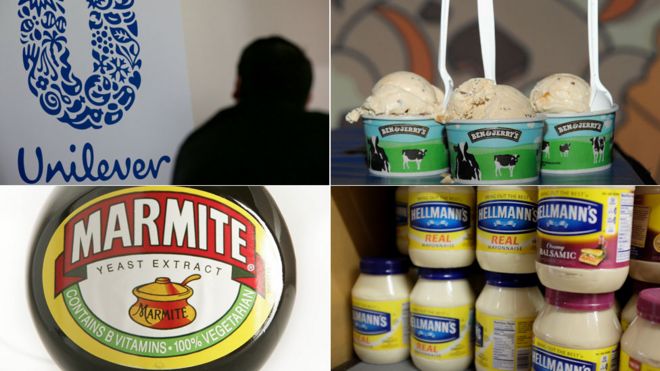
Could you draw a cost and revenue curve diagram, highlighting the potential issues facing Tesco and it's profits.
Can you also relate this to game theory and how an oligopolistic firm competes.
Tuesday, 6 September 2016
Unit 3: The Prisoners Dilemma explained in 60 seconds!
Look at the clip below. How could you relate this to business' decision making process?
Tuesday, 14 June 2016
Unit 3: The prisoners Dilemma - Game Theory
This is a short revision video taking students through the basic version of the Prisoner's Dilemma - game theory can be applied and evaluated in many parts of the year 2 micro course.
Sunday, 17 April 2016
Saturday, 14 November 2015
Unit 3: Oligopoly & Contestability
 A timely article on the price war in supermarkets. This looks at many issues that we study in Unit 3. Such as:
Game theory
Contestable markets
Kinked demand curve
Oligopoly
Click here for the article. We will discuss in class tomorrow (Sunday)
Sunday, 15 March 2015
Unit 3: Yogurt Cartel find after whistle blower goes to govt.
Click here to access an excellent article on the Yogurt industry in France. Lots of good stuff for Unit 3 type questions.
Kinked demand curve, prisoners dilemma, high concentration ratio, regulation etc etc.
Kinked demand curve, prisoners dilemma, high concentration ratio, regulation etc etc.
Tuesday, 24 February 2015
Unit 3: UK oil & gas industry in crisis. (Business strategy & game theory)

Rising costs and fall in price due to increased supply elsewhere are just some of the reasons.
Strategies discussed include reducing investment, cutting costs etc
Can you apply game theory to these questions?
Friday, 31 October 2014
Unit 3: Cartels and game theory - The Oil Industry
The Organization of Petroleum Exporting Countries (OPEC) is an example of an oligopoly colluding overtly to fix the price of a barrel of oil - currently there are 12 members and according to OPEC they control 81% of crude oil reserves. One of OPEC's main aims is to “ensure stable oil prices, secure fair returns to producing countries and investors in the oil industry“.
Prices have hardly been stable of late, in fact according to the Economist "the price of Brent crude fell over 25% from $115 a barrel in mid-June to under $85 in mid-October, before recovering a little". This great article is well worth a read as it goes into the global consequences of this fascinating turn of events in such a key market. But what caught my eye, in particular as we're not far off looking at oligopolies and game theory in A2 Microeconomics, was this Bloomberg article pointing out a potential breakdown of the OPEC price fixing agreement as predicted by the prisoner's dilemma and game theory:
 "China is finding oil supplies 14,000 miles away, aided by the global rout in prices that’s left producers vying for new markets. PetroChina Co. said it bought Colombian crude for a northern refinery for the first time because it was good value. The transaction underscores how the world’s second-biggest oil consumer is benefiting as producers from the Middle East to Latin America vie for customers in Asia."
Part of the reason for this price fall is the rapid increase in US production (not a member of OPEC) - see graphic left - and the Saudi response was to INCREASE production by half a percent (causing other OPEC members to follow the Saudi lead) determined to protect their market share against non-cartel rivals.
“OPEC appears to be gearing up for a price war,” Eugen Weinberg, head of commodities research at Commersbank , wrote on Oct. 2 - another feature of Oligopoly behaviour explained by the kinked demand curve.
The prisoner's dilemma highlights the difficulty in cartels lasting any length of time as the temptation to break the agreement and reap the rewards is simply irresistible - now the US, Latin American and others not tied to OPEC are willing to sell for cheap, are we witnessing the beginning of the end of this cartel?
Possible question:
to game theory in your answer. (16 Marks)
Tuesday, 14 October 2014
Unit 3: Jean Triole wins the Nobel Prize for Economics

The 2014 Nobel Prize has been awarded to a microeconomist who has done a huge amount of work on the economics of large-scale businesses operating in monopolistic and oligopolistic industries.
In the Q&A during the prize announcement, Tirole discussed some of his work on network/platform businesses such as Google.
Web search has aspects of natural monopoly - Google dominates in many different countries. And they set price well below cost -- as a customer you get a very good deal from Google, while advertisers, pay a lot. Consumer surplus is highly relevant here.
But the cost structure of such industries has a strong tendency to lead to dominant monopoly power - Tirole argues that industry regulation needs to ensure that dynamic firms can replace complacent, rent-seeking monopolies in the long run.
Here is the press release from the Nobel Academy - it is well worth a read
"Many industries are dominated by a small number of large firms or a single monopoly. Left unregulated, such markets often produce socially undesirable results – prices higher than those motivated by costs, or unproductive firms that survive by blocking the entry of new and more productive ones.
From the mid-1980s and onwards, Jean Tirole has breathed new life into research on such market failures. His analysis of firms with market power provides a unified theory with a strong bearing on central policy questions: how should the government deal with mergers or cartels, and how should it regulate monopolies?
Before Tirole, researchers and policymakers sought general principles for all industries. They advocated simple policy rules, such as capping prices for monopolists and prohibiting cooperation between competitors, while permitting cooperation between firms with different positions in the value chain. Tirole showed theoretically that such rules may work well in certain conditions, but do more harm than good in others. Price caps can provide dominant firms with strong motives to reduce costs – a good thing for society – but may also permit excessive profits – a bad thing for society.
Cooperation on price setting within a market is usually harmful, but cooperation regarding patent pools can benefit everyone. The merger of a firm and its supplier may encourage innovation, but may also distort competition.
The best regulation or competition policy should therefore be carefully adapted to every industry’s specific conditions. In a series of articles and books, Jean Tirole has presented a general framework for designing such policies and applied it to a number of industries, ranging from telecommunications to banking.
Drawing on these new insights, governments can better encourage powerful firms to become more productive and, at the same time, prevent them from harming competitors and customers."
Friday, 14 March 2014
Unit 3: Oligopoly, price wars and game theory...
Two good articles about the news that Morrisons have a £176m pre-tax loss for the year to February 2, and the strong impact that their plans to compete hard with the discount retailers has had on the stock market value of Tesco and Sainsburys.
We often cite the UK supermarket industry as an example of an oligopoly market, and today's news around Morrisons gives plenty of scope for students to use some stakeholder analysis to look at what is going on in that market - who wins and who loses?
For this one from the Daily Telegraph, 'Morrisons price war fears wipe £1.3bn off supermarkets', I would be inclined to give students the article to read and ask them to use economic theory to explain the headline, and the reference in the article to "pricing contagion" - and hope that their analysis would make use of some classic oligopoly material with the kinked demand curve, the dangers for oligopoly producers of price wars and game theory featuring strongly.
This second article, from the BBC website, has a bit more detail about the way in which Chief Executive Dalton Philips sees the market changing, with an emerging gap between the discounters and the 'big four', which he hopes Morrisons will be able to fill. Here is a quotation from him in the article: "We have identified over a billion pounds that we can take out of our business now and that billion pounds is going to be invested back into our proposition to get those lower prices for our customers." Can students produce graphs to show this?
Monday, 3 March 2014
Unit 3: Game Theory - Explained with model answer
Today's lesson will focus on game theory. We will look at a definition, some examples and you will work through a past paper in groups.
Group 1 - Michael, Sam, Aadil & Brendan
Group 2 - Karl, Mariah & Klaus
Group 3 - Aaish, Rebecca & Anthony
Click here to access the presentation on 'Game Theory'....
June 11 Past Paper - we will focus on Q10 C...
Mark Scheme
Examiners report & Model Answer: June 11 Q10 C...
June 13 Past Paper - We will focus on Q9 D...
Group 1 - Michael, Sam, Aadil & Brendan
Group 2 - Karl, Mariah & Klaus
Group 3 - Aaish, Rebecca & Anthony
Click here to access the presentation on 'Game Theory'....
June 11 Past Paper - we will focus on Q10 C...
Mark Scheme
Examiners report & Model Answer: June 11 Q10 C...
June 13 Past Paper - We will focus on Q9 D...
Tuesday, 4 February 2014
Unit 3: Excellent video which explains game theory
Here is a really well produced and clear visual explanation of the Hotelling
model of spatial location. As two competitive cousins vie for ice-cream-selling
domination on one small beach, discover how game theory and the Nash Equilibrium
inform these retail hot-spots. A good short video to use when teaching or
learning about game theory.
Click here for more on Game theory (It is quite complex, but may help you understand the basics)
Click here for more on Game theory (It is quite complex, but may help you understand the basics)
Monday, 25 November 2013
Unit 3: Pricing Strategies for the PS4
The launch of Sony's PS4 alongside Microsoft's XBox One signals the beginning of a highly intense competitive battle in the oligopolistic games console market. With both the new consoles being launched in time for the crucial Christmas sales period, pricing strategy is crucial in order to gain maximum market share.
In the US, Sony has priced the PS4 at $399 (retail). Of course that is the retail price. Distributors will be wanting to make their margin on each unit sold. So how much does it cost Sony to make a new PS4?
This video take a look at the individual component and assembly costs of a PS4. The experts involved estimate that the unit cost of a PS4 is $332 which comprises:
- Processor: $121
- Memory: $64
- Hard drive: $23
- Blu-ray drive $20
- Power management & audio controls: $16
- WiFi chip: $8
- Other components & assembly: $80
The unit cost of $332 does not include packaging or the dual-shock controller which ships with the console. Allowing for a retailer's margin or mark-up, that suggests that Sony is pricing the PS4 at substantially below the variable cost of the console. This is a classic example of a loss-leader. Sony is aiming to grab maximum market share in terms of console units sold, making its main revenues from games licensing and other add-ons.
Possible examination question - Assess the effectiveness of this pricing strategy for Sony (12 Marks)
Wednesday, 20 November 2013
Unit 3: Game theory & Supermarkets
There has been lots of talk in the media recently about the supermarkets’ Christmas advertising campaigns.
Sainsbury’s have employed an Oscar winning director for their campaign, although he failed to spot the Co-op’s own brand range in the background, Tesco stole a march on the others by starting their advertising campaign on a Friday, which makes a lot of sense, but Asda wanted to get maximum exposure by launching their campaign during X-Factor, the most watched program on commercial television. No doubt Morrison’s will be launching their Christmas campaign sometime in late January….

From an economic point of view, why do they do this? It makes very little sense as 90% of grocery shopping in the UK is already done in supermarkets, most of their customers will spend more at Christmas anyway, so why do they need to spend millions of pounds on extravagant marketing campaigns?
In fact, the only people they are likely to attract are their own customers, or people who shop at supermarkets anyway, there is likely to be very little extra custom from new sources, so it all seems like a bit of a waste of money.
The reasoning behind it is that the supermarket chains fear nothing more than losing a customer to their rivals during the festive season, or, indeed, at any time of the year. As most economists will have read in Freakonomics, it makes little economic sense for supermarkets to be open 24 hours a day, the extra costs involved mean they simply lose money by doing so, but they are playing a game. If, that one time, one of their customers needs to shop at 3am, and they are not open, what will the customer do? S/he will go to a rival supermarket. No big deal you might think, they will only be spending a tiny percentage of their annual supermarket spend, so it will have no real impact on market share…
BUT, what if that customer really likes this different shopping experience? What if they try a different product and like it? Where will they shop next time? That is a lot of revenue potentially lost by being closed at 3am, so they stay open, particularly in areas of high competition, just in case.
This is essentially the same reason that they spend so much on their Christmas campaigns. If Tesco decided it wasn't going to ‘waste’ money on advertising this year, as they only attract a small percentage of new customers, their customers may be tempted by the luxurious nature of Sainsbury’s campaign, and Tesco may never see that customer again.
People spend more in supermarkets in December than in any other month, regardless of advertising, so it would make sense for the supermarkets to get together and decide that none of them should advertise over the festive season. This would save each chain many millions of pounds, which they could either plough into dynamically changing the shopping environment for the better, or into price reductions for customers.
I can imagine the meeting now:
Tesco Marketing Director:
We see the benefits of not conducting a Christmas advertising campaign, and if you won’t do one, we won’t do one.
Sainsbury’s Marketing Director:
We agree that it serves us all not to spend this money in this area, we won’t do one either
Asda Marketing Director:
Yeah, it’s a pinky promise from us too.
And they each go off and spend millions developing an advertising campaign for the month of December! Classic Game Theory. The incentive to cheat is too high, because if Tesco do a campaign and the others don’t, they will be swamped with custom, whereas Sainsbury’s and Asda will be left with an awful lot of unsold stock, so whilst, in theory, it makes sense for them not to advertise, in practice they always will. As a result, we all have to see sickening Christmas images and we have to try and live up to expectations….
Tuesday, 19 November 2013
Unit 3: Prisoners Dilemma - We are all going to die! :-)
A rather scary but neat way of showing the escalation risk in the nuclear arms race, and race to the bottom / Prisoners' Dilemma that exists in this field.
Japanese artist Isao Hashimoto has created a time-lapse map of the 2053 nuclear explosions which have taken place between 1945 and 1998, beginning with the Manhattan Project’s “Trinity” test near Los Alamos and concluding with Pakistan’s nuclear tests in May of 1998.
Each nation gets a blip and a flashing dot on the map whenever they detonate a nuclear weapon, with a running tally kept on the top and bottom bars of the screen. 1960s was a bit scary!
Wednesday, 2 October 2013
Unit 3: Past Questions on 'Game Theory'
Past Questions on Game Theory
Jan 11:
Game theory can be used to illustrate which of the following
examples of competitive
behaviour?
A Price leadership in perfect competition
B Revenue maximisation in monopolistic competition
C Limit pricing in monopolistic competition
D Tacit collusion in oligopoly
E Price discrimination by a monopolist.
Jun 10 Q9 Part C – 12 Marks
Jun 11 Q10 Part C – 12 Marks
Jan 12 Q9 Part D – 16 Marks
Jan 12 Q10 Part C – 12 Marks
Jun 13 Q9 Part D – 16 Marks
Subscribe to:
Posts (Atom)